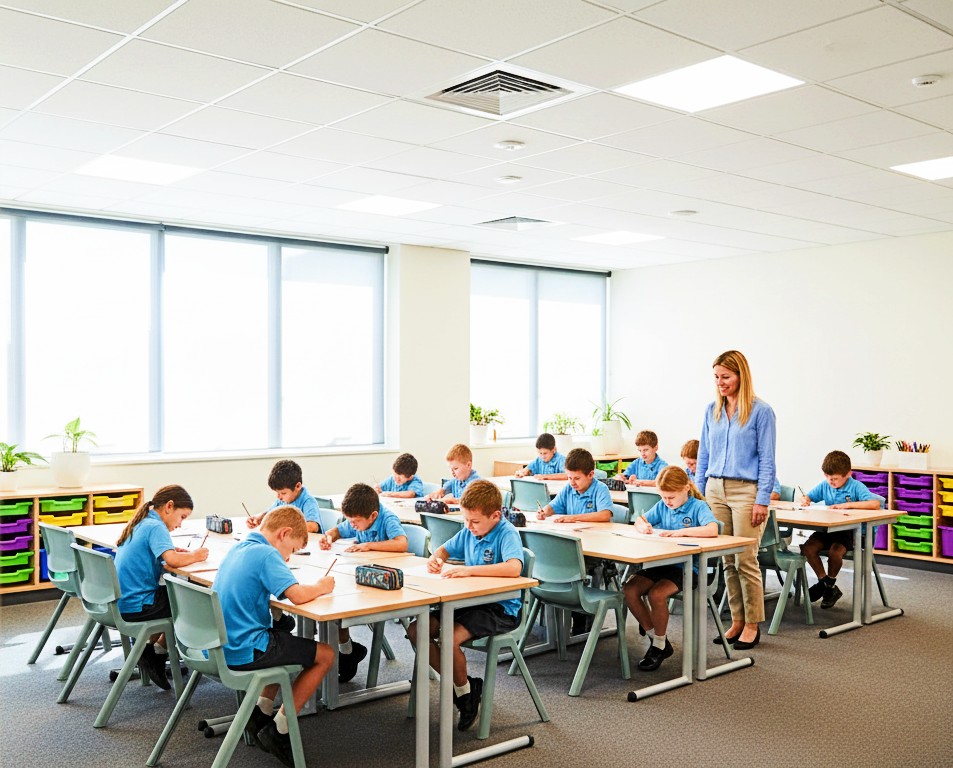
Why Some Students Can’t Focus in a “Normal” Classroom — and It’s Not a Behaviour Problem
Some classrooms sound “normal” to adults, but for many students the background noise is constant and hard to ignore. When sound bounces around a room, students have to work harder just to listen. That extra effort can show up as poor concentration, missed instructions, and fatigue — even when the student is trying their best.
This is often mistaken as a behaviour issue. In reality, it can be an acoustic issue. If the room has a lot of reverberation, speech becomes less clear and small noises build up. Students who are sensitive to sound (or who struggle to separate voices from background noise) feel it first, but the truth is: it affects the whole class.
How SerenityLite Ceiling Panels Can Support Student Focus in Busy Classrooms
Why background noise makes learning harder
In a reverberant classroom, sound doesn’t stop when the talking stops. It lingers. That means instructions, group work, chair movement and hallway noise all blend together. For some students, separating the teacher’s voice from everything else is genuinely difficult.
- Reduced attention: students lose track of instructions and need more repetition.
- Poor retention: students “hear” the lesson, but don’t take it in.
- Listening fatigue: concentration drops as the day goes on.
- Stress responses: students may become restless, withdrawn, or overwhelmed.
Why some students struggle more than others
Not every student experiences noise the same way. Some can tune it out. Others can’t. This is common for students with sound sensitivity, anxiety, or auditory processing challenges. The problem is that support is often only taken seriously once formal documentation is in place — yet the classroom environment is something schools can improve for everyone.
Why headphones and earplugs are not a classroom fix
It’s understandable to look for quick solutions such as headphones or earplugs. But in classrooms they often fall short. Students still need to hear the teacher, participate in discussion, and interact with peers. Some students also dislike the feel of headphones or won’t wear them consistently.
What actually helps: reducing reverberation across the whole room
The practical goal is not silence — it’s speech clarity. When reverberation is reduced, the teacher’s voice becomes easier to understand and the room feels calmer. This supports learning without requiring students to wear anything or teachers to change how they teach.
Why SerenityLite ceiling panels suit classrooms
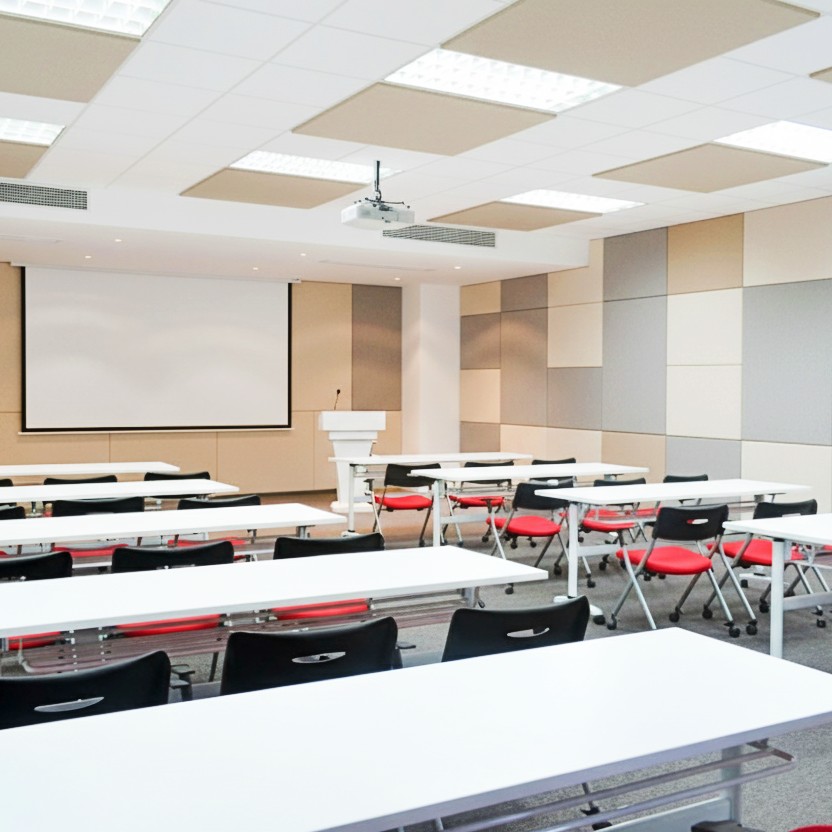
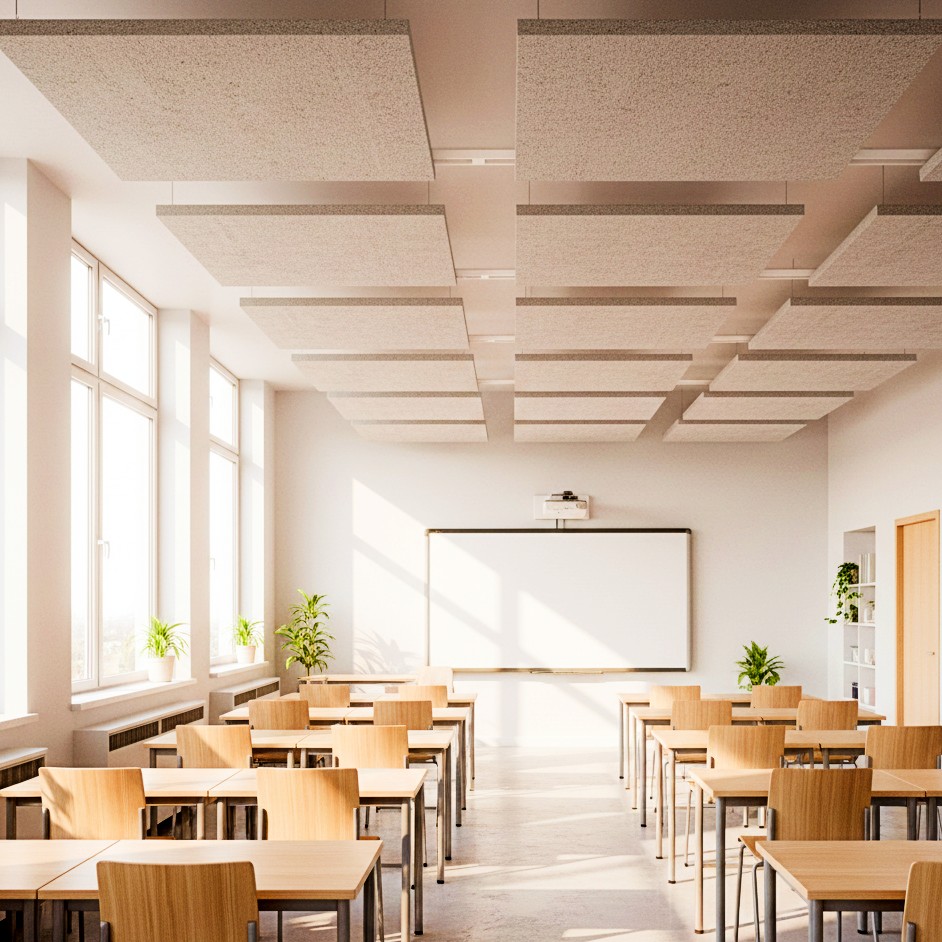
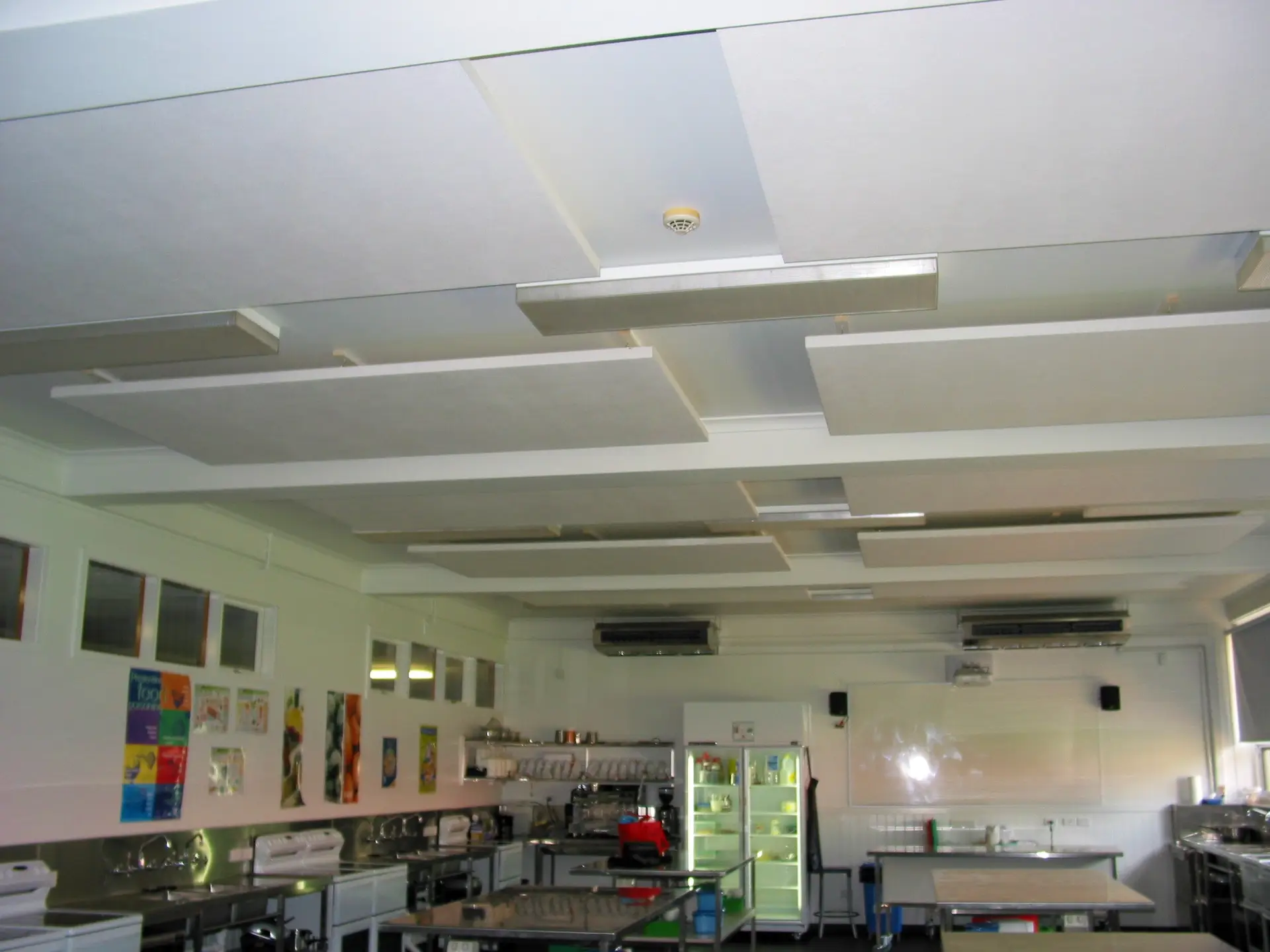
SerenityLite is a ceiling-based acoustic panel system that helps control reflected noise. In many classrooms, the ceiling is the largest uninterrupted hard surface. Treating it can deliver broad improvement across the whole room, especially where walls are already covered with teaching materials, storage, or windows.
- Supports clearer instructions and calmer group work
- Helps reduce noise build-up during busy classroom activity
- Works as a retrofit option for existing classrooms
- Improves comfort for both students and teachers
Quick comparison table: common classroom options
| Option | What it aims to do | Where it falls short | Better fit for |
|---|---|---|---|
| Noise rules and routines | Reduce unnecessary talking | Doesn’t address reverberation | Rooms that already have good acoustics |
| Headphones/earplugs | Reduce sound for one student | Can block teacher voice; comfort and stigma issues | Short bursts or specific sensory needs |
| SerenityLite ceiling panels | Reduce reflected noise across the whole room | Needs suitable coverage for the space | Whole-class learning and speech clarity improvement |
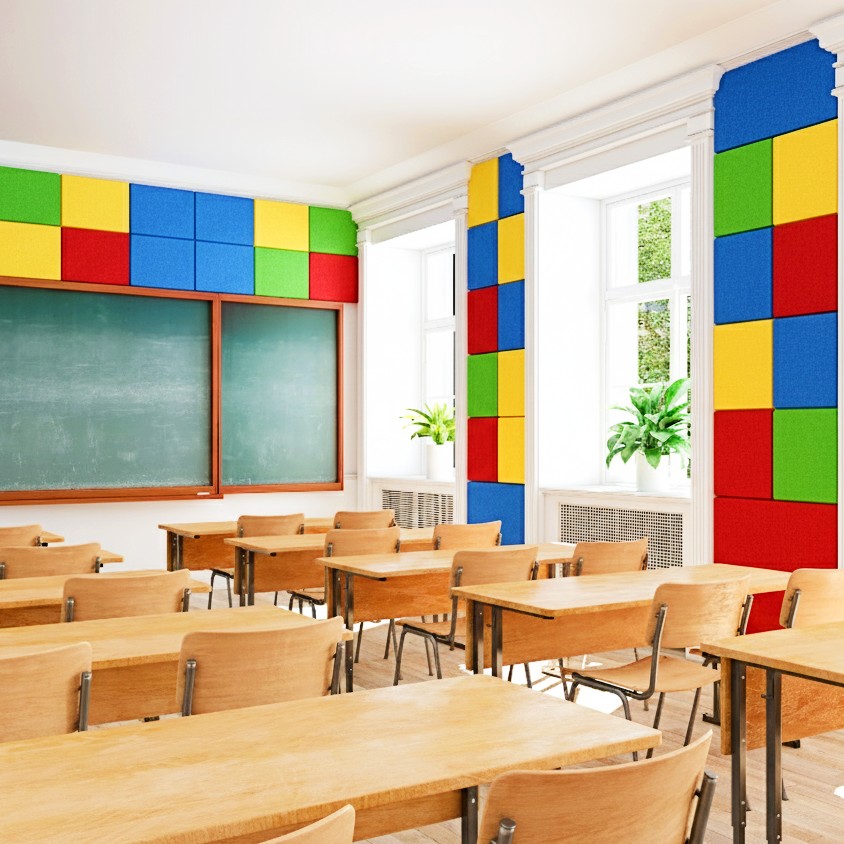
| Wall panels | Reduce reflections on walls | Wall space often limited in classrooms | Rooms with clear wall zones available |
Practical steps schools can take this term
- Start with the ceiling: it often provides the largest improvement without disrupting teaching.
- Target speech clarity: aim for instructions that are easy to understand at the back of the room.
- Support inclusive learning: quieter rooms help every student, including those who struggle silently.
- Gather feedback: teacher observations before and after are valuable and easy to record.
Call to action
If students are missing instructions or losing focus in a busy classroom, the room may be working against them. SerenityLite ceiling panels can help reduce reverberation and make learning feel easier.
Contact Sontext to discuss SerenityLite ceiling options for schools, and we can recommend suitable coverage based on your classroom size and use.
FAQs
Why do some students struggle to focus in noisy classrooms?
Some students find it difficult to separate the teacher’s voice from background noise, especially in reverberant rooms where sound lingers.
Is classroom noise always a behaviour problem?
No. Classroom routines help, but room acoustics can amplify everyday activity and reduce speech clarity even when students are trying.
Do acoustic ceiling panels help the whole class?
Yes. Reducing reverberation improves speech clarity and lowers noise build-up across the room, which supports learning for everyone.
Why is the ceiling a good place to start?
The ceiling is often the largest hard surface in a classroom. Treating it can provide broad improvement without taking up wall space.
How do we work out the right amount of SerenityLite coverage?
Coverage depends on room size, ceiling height and surface finishes. Sontext can recommend a suitable layout based on your classroom details.