
Choosing the Right Ceiling Acoustic Treatment
When a space suffers from echo, poor speech clarity or general noise build-up, the ceiling is often the first place designers and specifiers look for acoustic treatment. In many commercial interiors, there is limited wall space available due to glazing, joinery, services or circulation requirements. That makes the ceiling one of the most practical surfaces for sound absorption.
Two of the most common ceiling-based acoustic options are acoustic ceiling baffles and acoustic ceiling panels. Both can improve the sound quality of a room, but they work in slightly different ways and suit different types of spaces.
Acoustic Ceiling Baffles vs Ceiling Panels – Which Works Best?
For architects, designers and contractors, the question is not simply which product absorbs sound. It is also about ceiling height, exposed services, visual style, maintenance access and the way the room will actually be used. Choosing the right ceiling treatment early can make a significant difference to how successful the finished space feels.
Why Ceiling Acoustics Matter
Many modern buildings include hard finishes that reflect sound rather than absorb it. Plasterboard, concrete, glass, metal and hard flooring all contribute to reverberation. In open-plan offices, classrooms, auditoriums and public spaces, this reflected sound can quickly build up and create an uncomfortable environment.
Common signs that a room needs ceiling acoustic treatment include:
- echo and reverberation after speech or movement
- difficulty hearing clearly in meetings or teaching spaces
- rising background noise as more people use the room
- poor speech intelligibility in large open areas
- general discomfort caused by a noisy interior
Because ceilings usually cover a large uninterrupted area, they offer an excellent opportunity to introduce sound absorption without affecting floor space or room function.
What Are Acoustic Ceiling Panels?
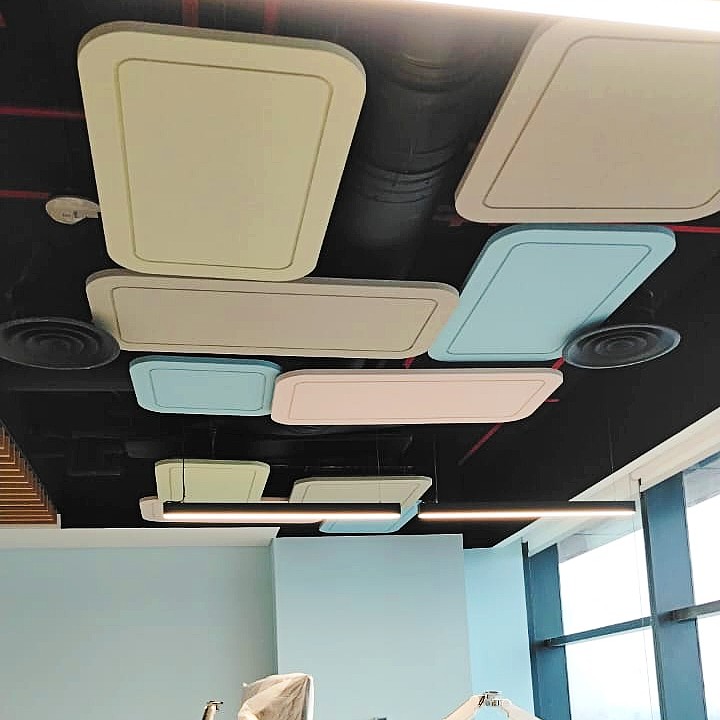
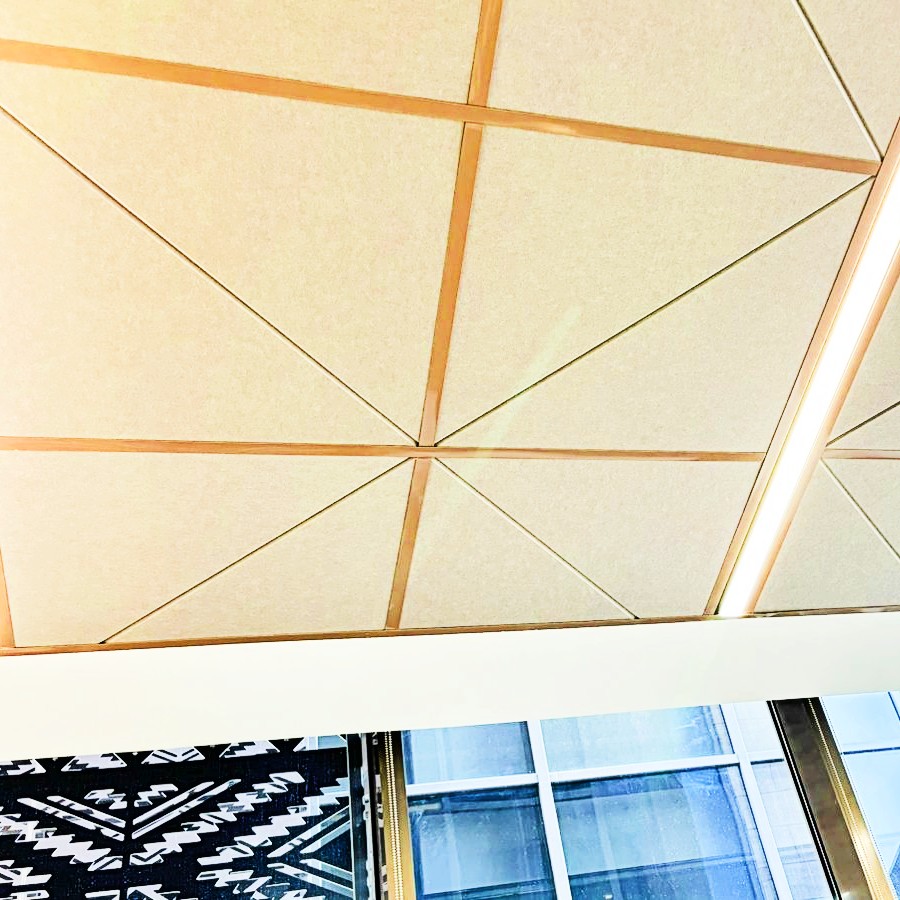
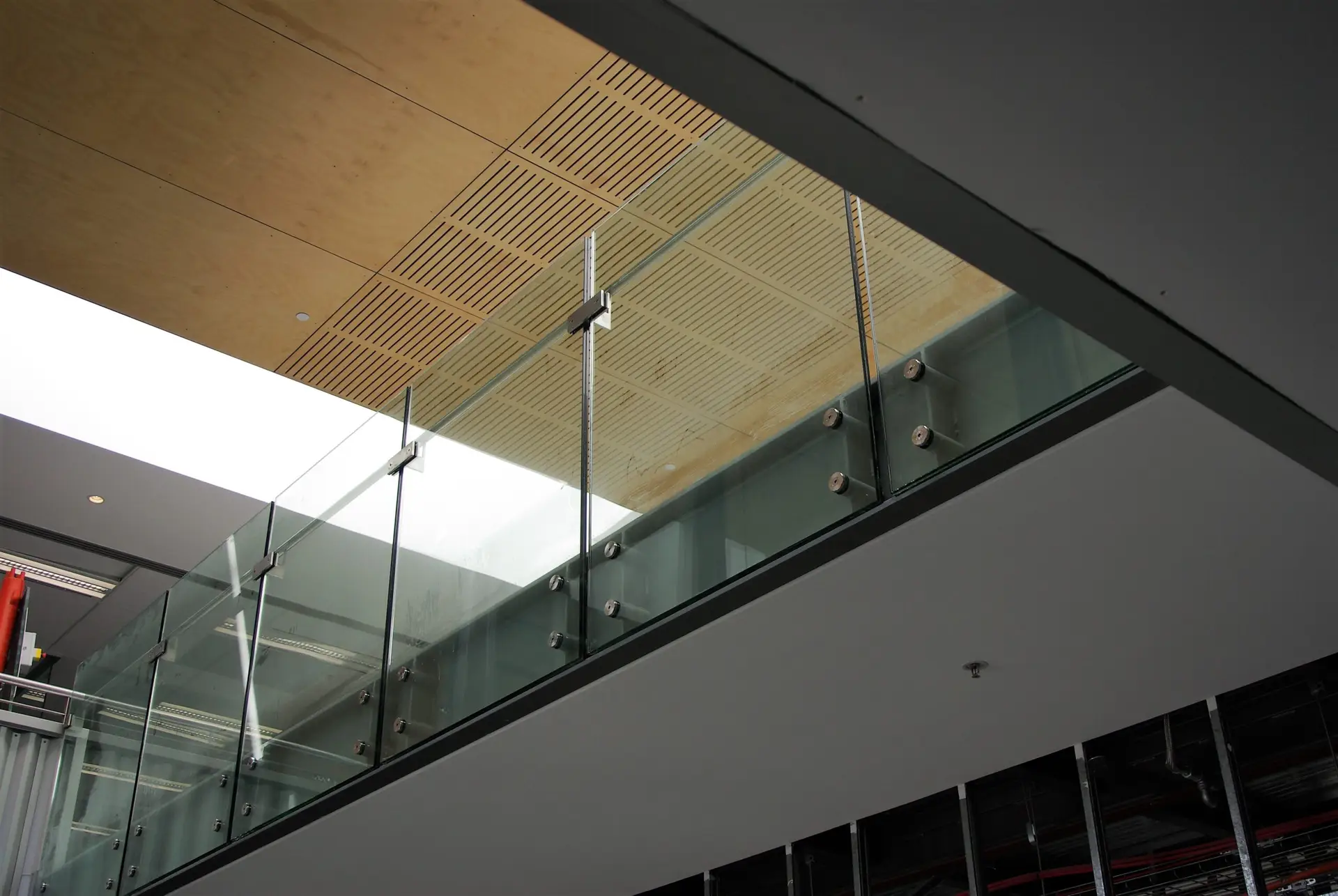
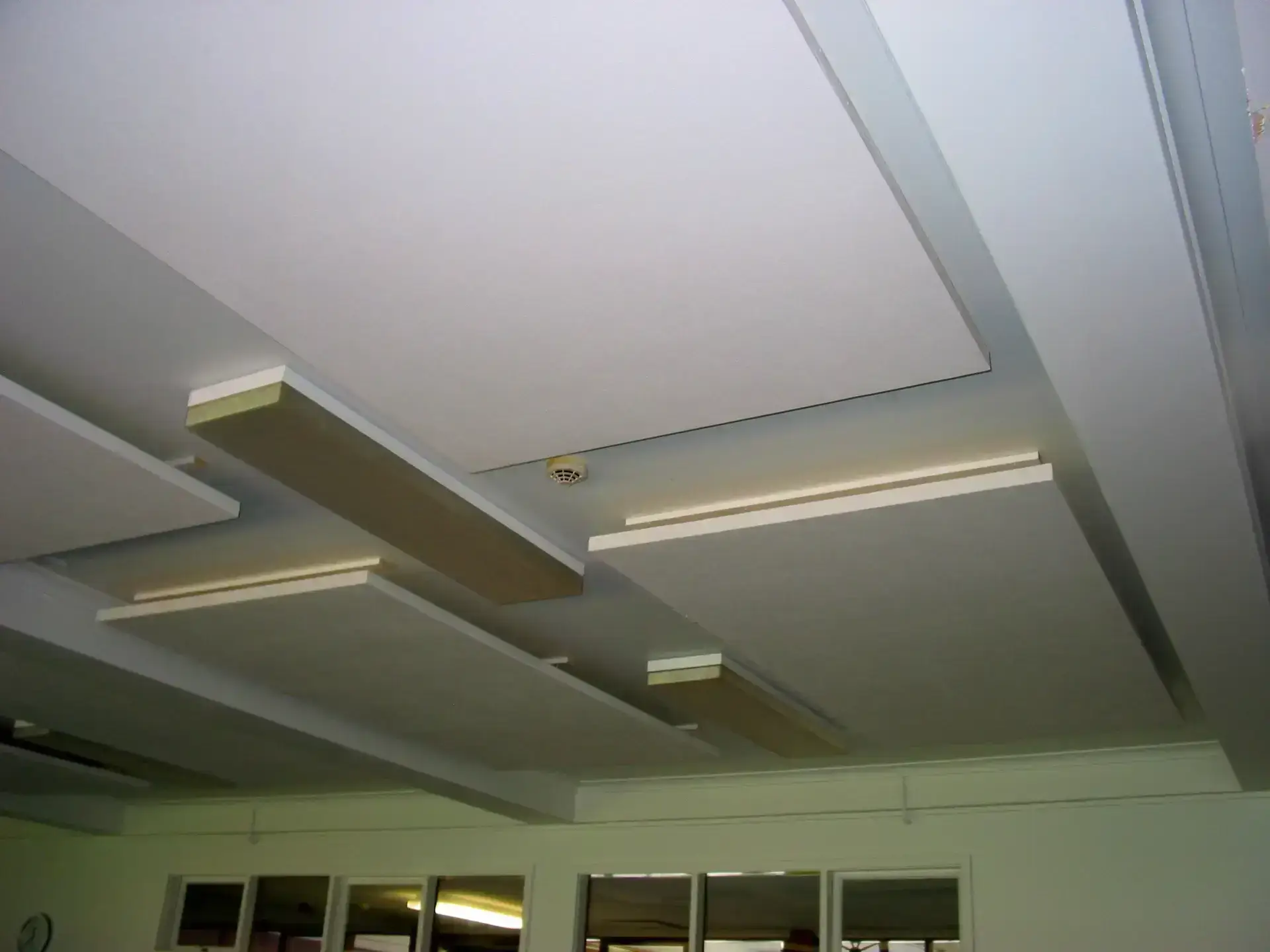
Acoustic ceiling panels are generally installed horizontally against or below the ceiling plane. They can be fixed directly to the ceiling or suspended as separate ceiling elements, depending on the product and the design intent. Their purpose is to absorb sound reflecting back into the room from above.
Ceiling panels are often used where the designer wants a clean and organised ceiling appearance. They can suit meeting rooms, classrooms, offices, hospitality areas and other spaces where acoustic control is needed without creating a strongly open or industrial ceiling look.
In many interiors, ceiling panels provide a balanced result because they are visually neat, effective across key speech frequencies and relatively straightforward to integrate into a fitout.
What Are Acoustic Ceiling Baffles?
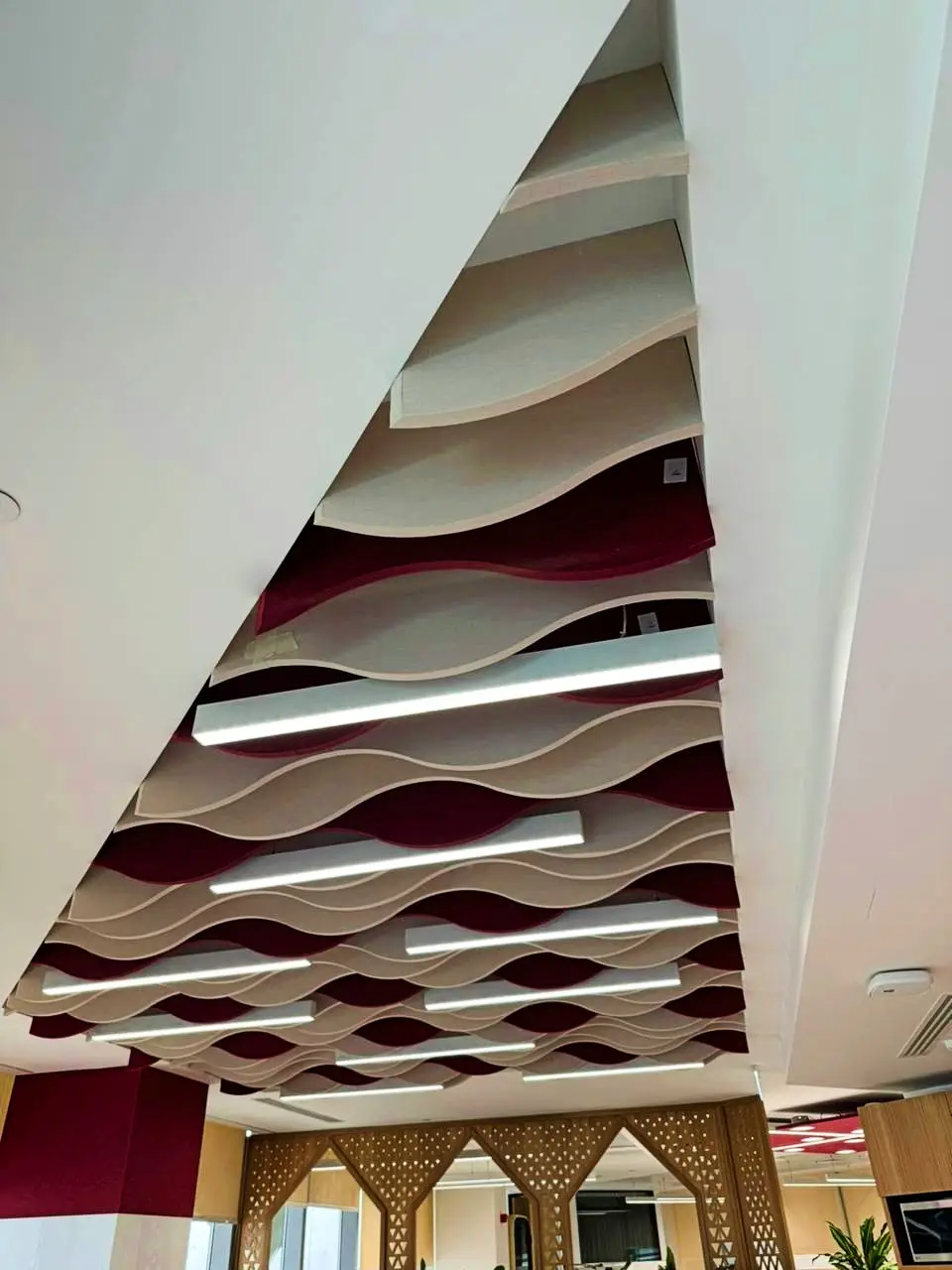
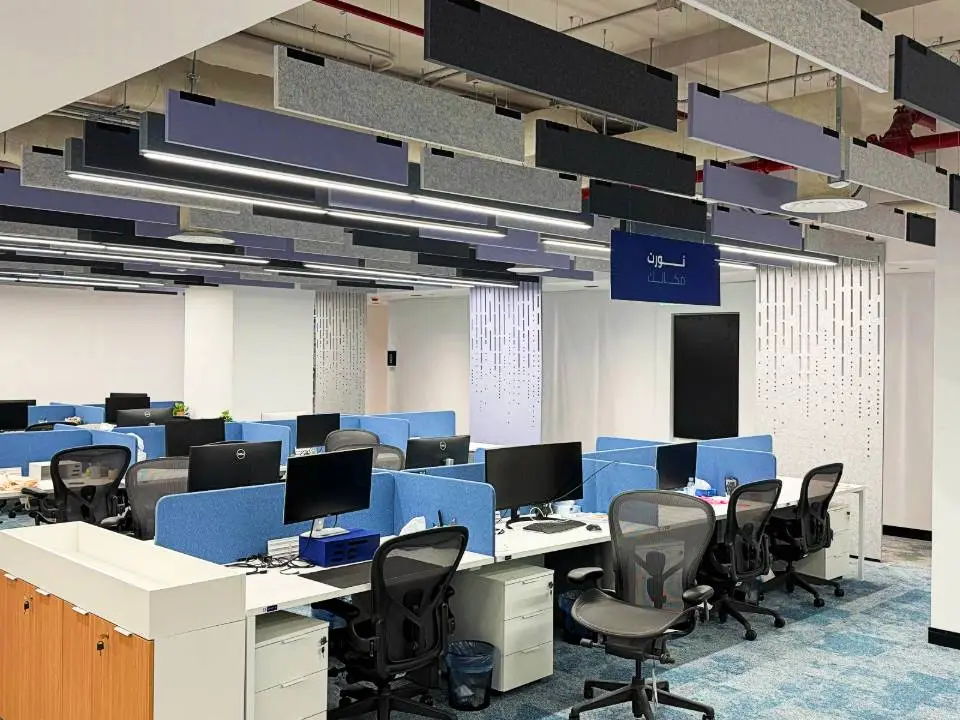
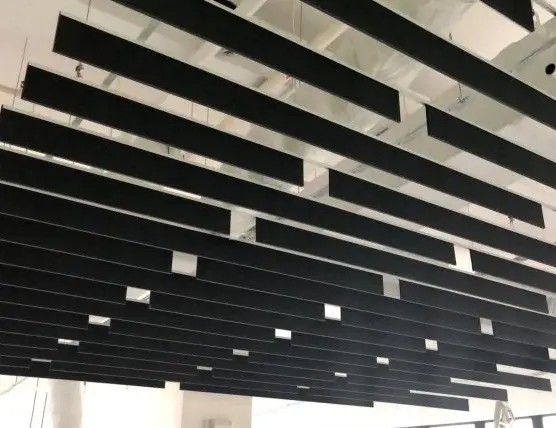
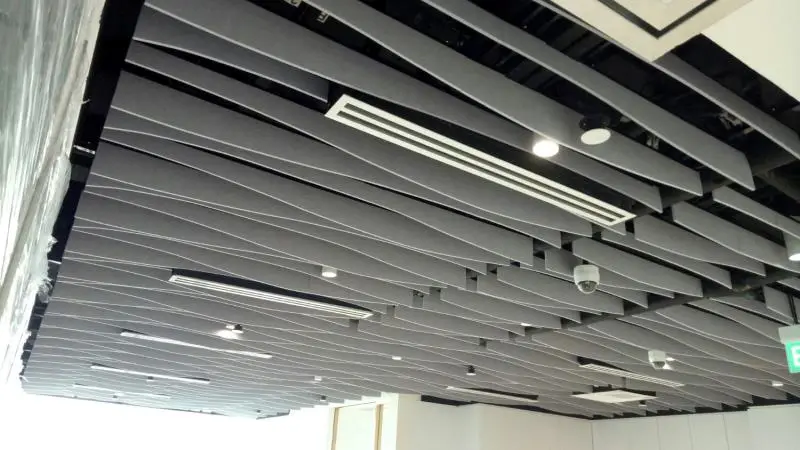
Acoustic ceiling baffles are vertical elements suspended from the ceiling, usually in rows or patterns. Because both sides of each baffle are exposed to the room, they can present a large sound-absorbing surface area while still leaving much of the ceiling visually open.
Baffles are commonly used in spaces with higher ceilings, exposed services or open architectural layouts. They are especially useful in areas where a traditional closed ceiling is not desired, or where designers want to maintain access to services, lighting and structure above.
They are often seen in open-plan offices, education spaces, community buildings, sports areas and other large-volume interiors where noise control is important but the ceiling must remain visually active.
How the Two Systems Differ
The main difference between ceiling panels and baffles is the way they occupy the ceiling space. Ceiling panels create a more continuous horizontal treatment, while baffles break up sound using suspended vertical elements.
This affects not only the appearance of the room, but also how the acoustic treatment interacts with reflected sound. Baffles can be especially effective in open and tall spaces because they increase exposed absorbing surface area without fully covering the ceiling. Panels, on the other hand, often suit rooms where a cleaner and more contained ceiling treatment is preferred.
Neither system is automatically better in every project. The right choice depends on the room size, ceiling height, visual direction and how much acoustic coverage is required.
When Acoustic Ceiling Panels Are the Better Option
Ceiling panels are often the better choice in spaces where the design calls for a tidy ceiling plane or where the room has a more standard proportion. They suit applications such as meeting rooms, boardrooms, classrooms and smaller commercial interiors where strong sound absorption is needed without making the ceiling too visually busy.
They may also be preferred where lighting layouts, air-conditioning outlets and ceiling coordination need to remain simple. In these projects, panels can provide reliable sound absorption while fitting neatly within the broader interior scheme.
When Acoustic Ceiling Baffles Are the Better Option
Baffles are often the stronger option in large open spaces, particularly where the ceiling is high or services are exposed. They allow designers to retain a sense of height and openness while still introducing substantial acoustic treatment.
This can be especially useful in open-plan offices, circulation areas, multipurpose rooms, foyers and education spaces where noise can travel across large volumes. Baffles also give architects more opportunity to use rhythm, spacing and colour as part of the overall design.
In some interiors, baffles become both an acoustic solution and a visual feature.
Can Baffles and Panels Be Used Together?
Yes. In many projects, the most successful acoustic result comes from combining multiple treatment types. A designer might use ceiling panels in enclosed rooms and baffles in open shared areas. In larger commercial environments, it is common to mix wall treatments, ceiling panels and suspended baffles to suit different acoustic conditions throughout the building.
This approach allows each area to receive the type of treatment that best matches its function rather than forcing a single product format across every space.
Design, Performance and Practicality
Acoustic product selection should not be based on appearance alone. It should also consider the amount of sound absorption required, the room volume, the level of speech activity, service coordination and long-term maintenance needs. What works in a boardroom may not be right for an open office, and what suits a classroom may not be ideal for a foyer or auditorium.
For this reason, the best starting point is usually to look at the room’s actual acoustic problem first, then select the ceiling treatment that addresses it most effectively while still working with the design.
Which Works Best?
Acoustic ceiling panels work well where a clean ceiling treatment and reliable sound absorption are needed in contained spaces. Acoustic ceiling baffles work well where the room is larger, taller or more open and where the design benefits from keeping the ceiling visually lighter.
In practical terms, both systems can perform very well when they are chosen for the right environment. The best result comes from matching the product format to the space rather than looking for a one-size-fits-all answer.
Call to Action
If you are deciding between acoustic ceiling baffles and ceiling panels for an office, school, public building or commercial fitout, contact Sontext to discuss the most suitable acoustic ceiling solution for your project.
Acoustic Ceiling Baffles vs Ceiling Panels at a Glance
| Feature | Acoustic Ceiling Baffles | Acoustic Ceiling Panels |
|---|---|---|
| Typical Position | Suspended vertically from the ceiling | Fixed or suspended horizontally |
| Best For | Open-plan spaces, high ceilings, exposed services | Meeting rooms, classrooms, offices, contained spaces |
| Visual Effect | Open, architectural, rhythmic | Clean, organised, more continuous ceiling appearance |
| Access to Services | Often easier to maintain access above | Depends on panel system and ceiling layout |
| Suitable for High Ceilings | Very suitable | Can work well, but depends on coverage and layout |
| Common Applications | Open offices, foyers, education spaces, public buildings | Boardrooms, classrooms, offices, hospitality interiors |


Frequently Asked Questions
What is the difference between acoustic ceiling baffles and ceiling panels?
Acoustic ceiling baffles are vertical elements suspended from the ceiling, while ceiling panels are typically installed horizontally. Both absorb sound, but they suit different room types and ceiling conditions.
Are ceiling baffles better than ceiling panels?
Not always. Baffles are often better in large open spaces with higher ceilings, while ceiling panels are often better in smaller or more contained rooms where a cleaner ceiling appearance is preferred.
Where should acoustic ceiling baffles be used?
Acoustic ceiling baffles are commonly used in open-plan offices, schools, foyers, public spaces and other areas with exposed ceilings or larger room volumes.
Where should acoustic ceiling panels be used?
Acoustic ceiling panels are often used in meeting rooms, classrooms, offices and commercial spaces where sound absorption is needed across a more continuous ceiling surface.
Can ceiling baffles and ceiling panels be used together?
Yes. Many projects use both systems in different parts of the building to suit the needs of each space and achieve a more balanced acoustic result.