
Why Classroom Noise Is Overwhelming Teachers — and What Schools Can Do About It
Many teachers will tell you the hardest part of the day isn’t the lesson plan — it’s the noise. Not just the volume, but the constant, unpredictable mix of voices, chair scrapes, movement, and classroom activity that builds up across the day. When sound keeps bouncing off hard surfaces, it becomes tiring to manage and harder for students to listen.
A noisy classroom is often treated as a behaviour problem. But in many rooms, it’s also an acoustic problem. The more reverberation a room has, the more noise “hangs around” after every word, and the more everyone has to raise their voice to be heard. That impacts teacher wellbeing, student attention, and overall learning.
How to Reduce Classroom Noise Without Changing How Teachers Teach
Why classroom noise feels so draining
In a typical classroom, noise is rarely one single source. It’s the combination of many small sounds, happening at once, in a room that may have hard ceilings, hard walls, windows, and minimal soft finishes. When those surfaces reflect sound, the room becomes “lively” in the wrong way.
- Teachers speak louder to compete with the room.
- Students talk louder because they can’t hear each other clearly.
- Small noises feel bigger because the room keeps amplifying them.
- End-of-day fatigue increases because the brain is filtering noise all day.
The hidden cost: teacher stress and classroom control
When the room is reverberant, normal classroom activity can quickly tip into “too much.” That doesn’t mean students are doing the wrong thing — it means the room isn’t supporting speech clarity. In practical terms, that can lead to more repeated instructions, more calling for attention, and more effort required to settle the class.
What actually reduces classroom noise
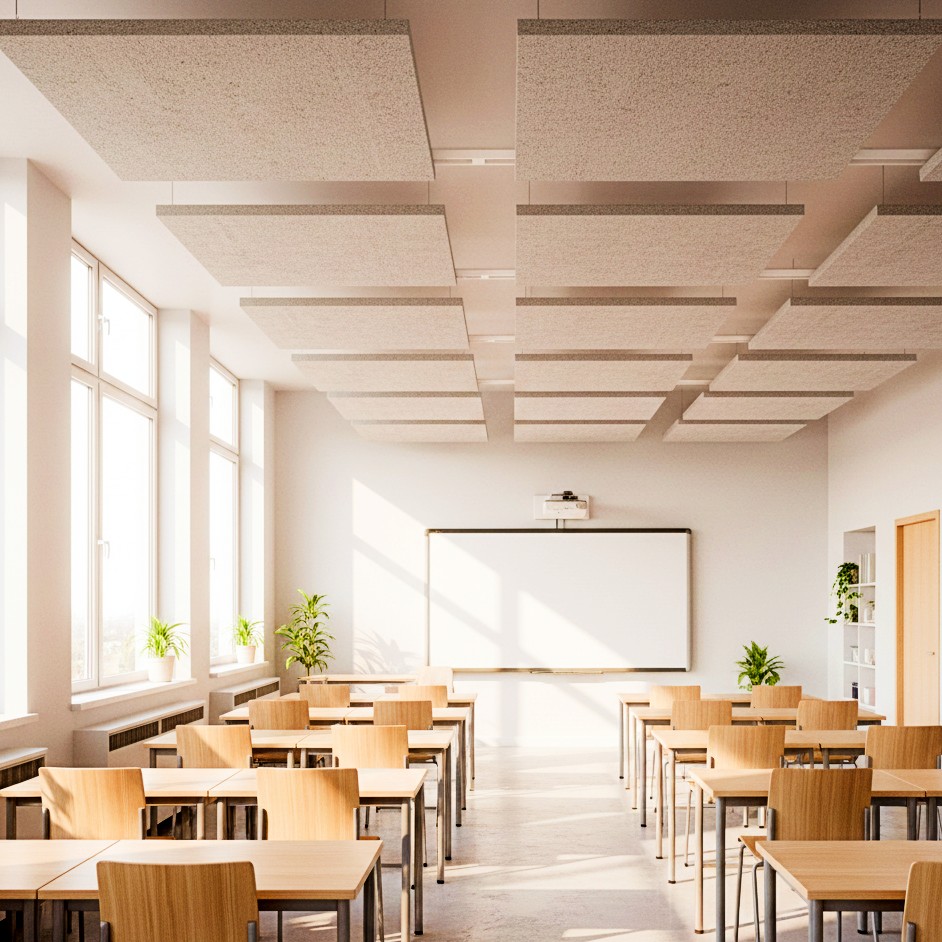
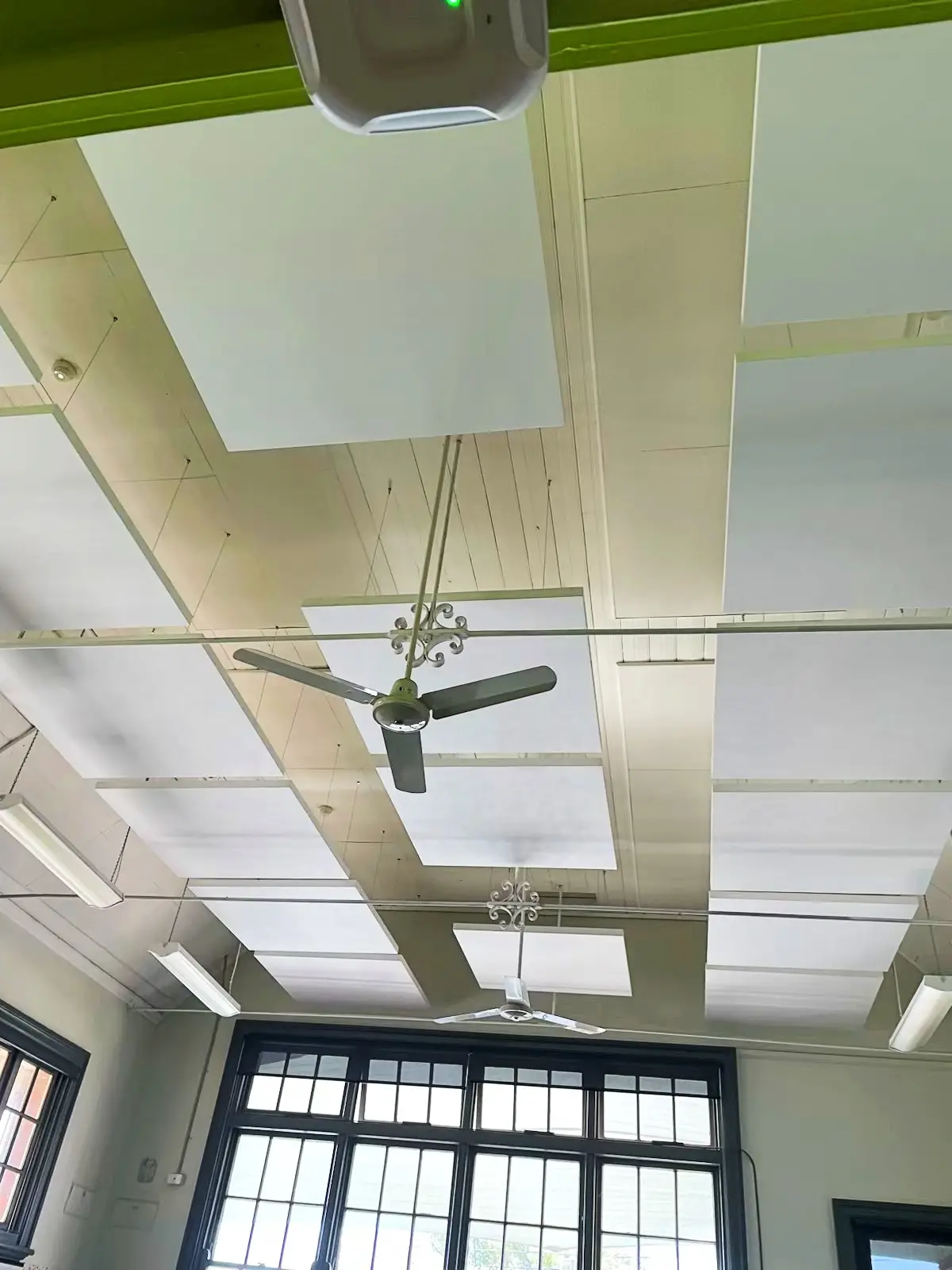
The goal isn’t silence. The goal is control — reducing reverberation so speech is clearer and the room doesn’t keep amplifying everyday sounds. The most effective way to do that in many classrooms is to treat the ceiling, because it’s often the largest uninterrupted reflective surface.
Why SerenityLite ceiling panels suit existing classrooms
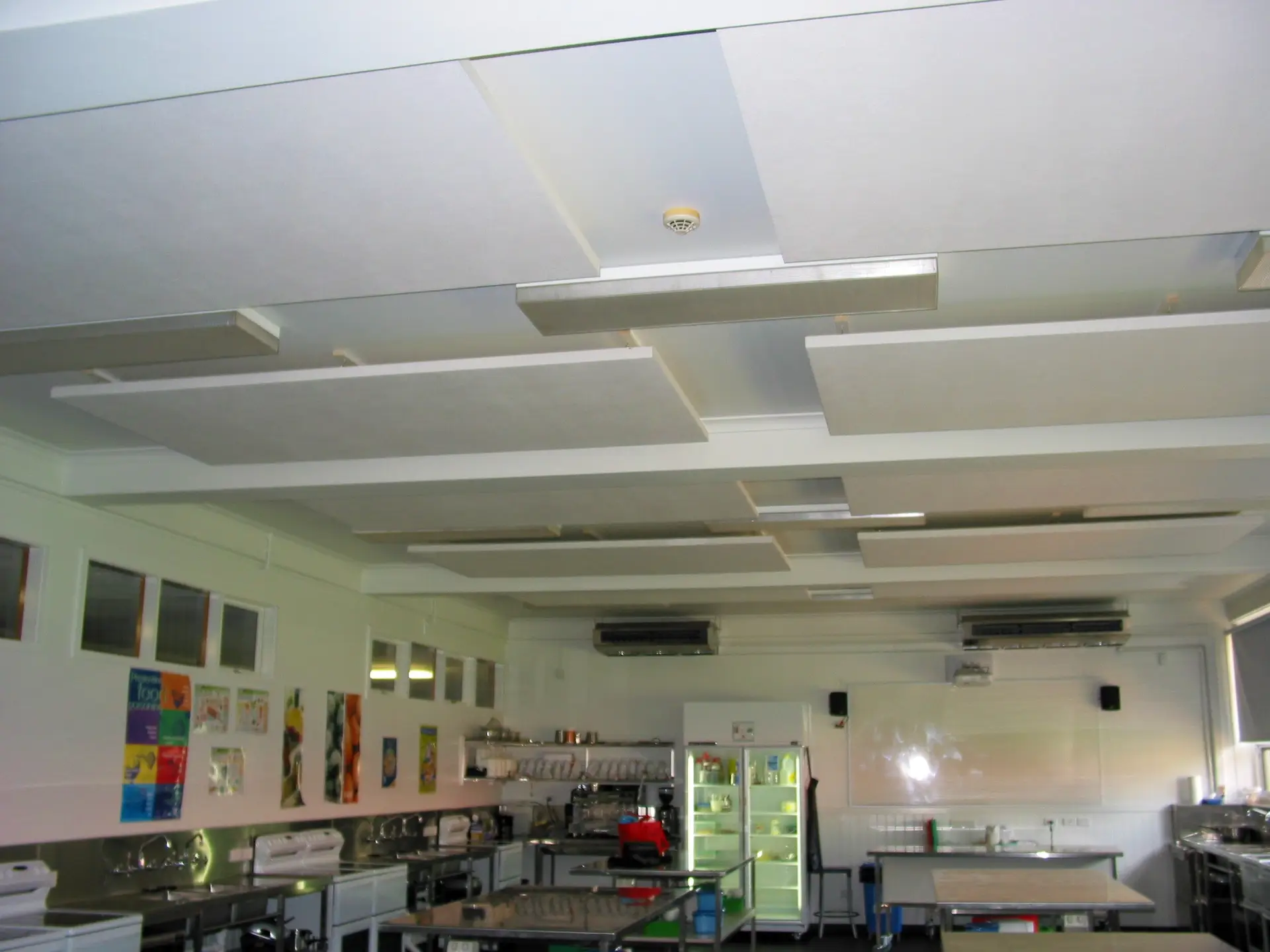
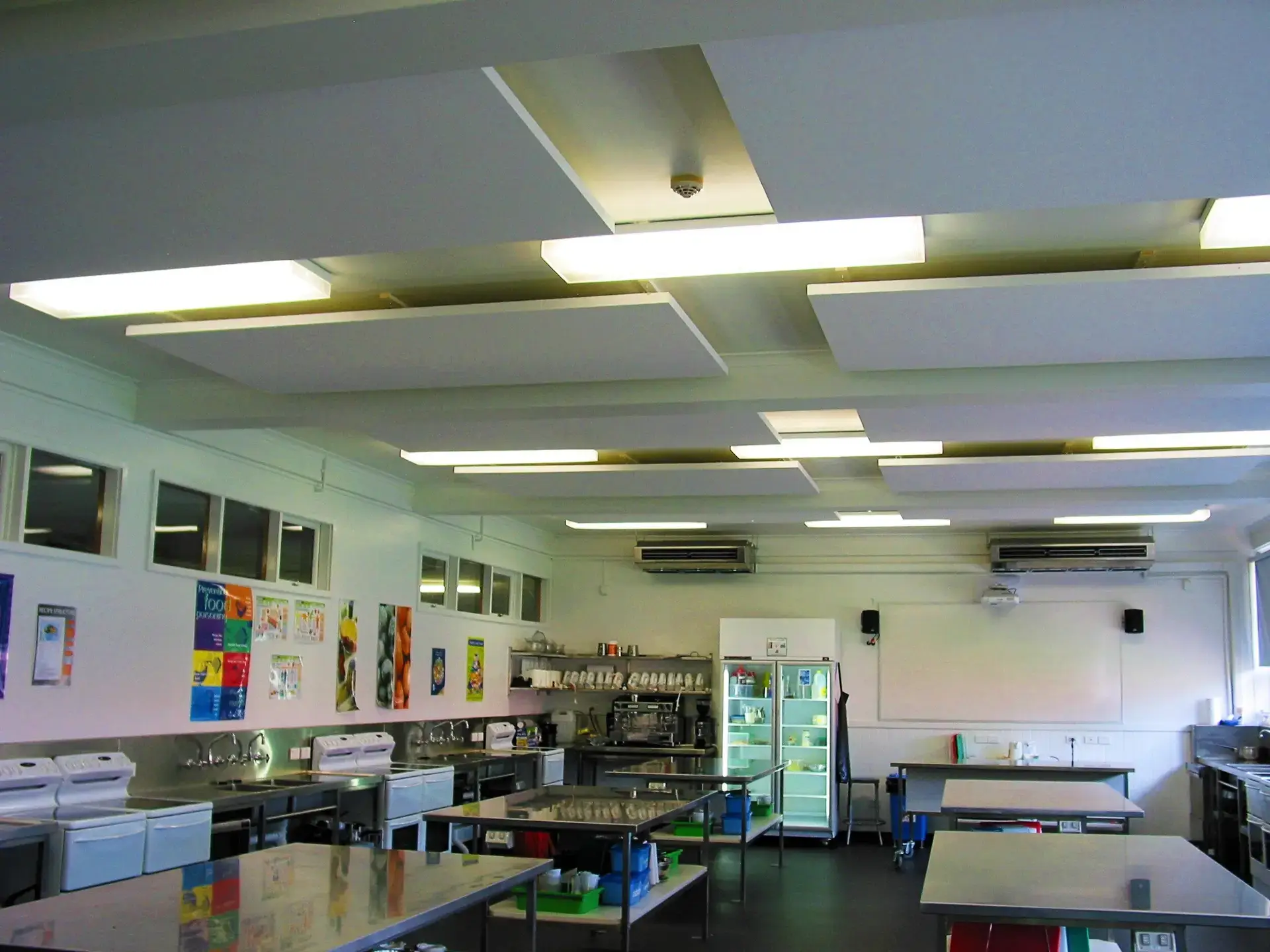
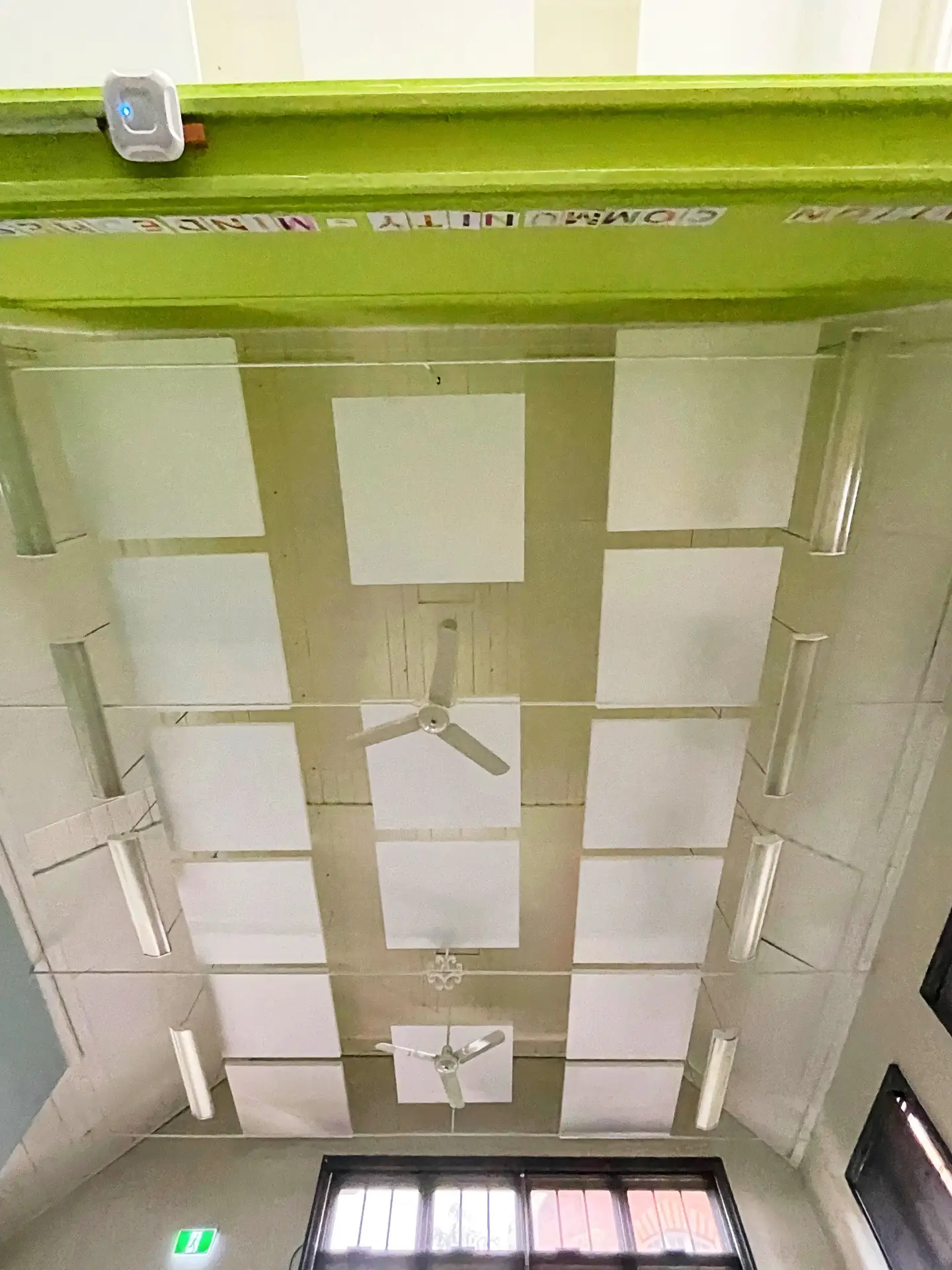
SerenityLite is designed for ceilings where wall space is limited or already used for teaching materials. It provides broad-area absorption to reduce reflected noise, which helps teachers speak comfortably and helps students understand instructions without strain.
Quick comparison table: common classroom approaches
| Approach | What it does | Typical limitation | Best use |
|---|---|---|---|
| Behaviour-only strategies | Sets expectations and routines | Doesn’t fix reverberation | Works best when the room already supports speech |
| Wearables (earplugs/headphones) | Reduces sound reaching one person | Can block teacher voice, comfort and stigma issues | Short-term support for sensitive learners |
| Ceiling absorption (SerenityLite) | Reduces reflected noise across the whole room | Needs correct coverage and placement | Whole-class improvement without changing teaching |
| Wall panels | Targets reflections on walls | Wall space often limited in classrooms | Rooms with clear wall zones available |
Simple steps schools can take
- Identify the reflective surfaces: hard ceilings, hard walls, glass, and large empty areas.
- Start with the ceiling: it usually gives the biggest improvement for the least disruption.
- Focus on speech clarity: aim for a room where instructions are heard clearly at the back.
- Measure and document: before/after feedback from staff is valuable, and testing can be added if needed.
Call to action
If teachers are finishing the day exhausted from noise, the room may need support — not just the staff. SerenityLite ceiling panels are a practical way to reduce reverberation and create calmer, clearer classrooms.
Speak with Sontext about SerenityLite ceiling solutions for schools, and we can recommend panel coverage based on your room size and use.
FAQs
What causes classroom noise to feel worse than it should?
Hard surfaces reflect sound, so everyday activity builds up and lingers. This makes voices compete with the room, not just with each other.
Will ceiling panels make the classroom too quiet?
No. The aim is not silence. The aim is better control of reverberation so speech is clearer and the room feels calmer.
Why treat the ceiling instead of the walls?
The ceiling is often the largest uninterrupted reflective surface. Treating it can provide broad improvement without taking away teaching space.
How do we know how many panels we need?
It depends on room size, ceiling height, and how reflective the space is. A simple room assessment can guide suitable coverage.
Can SerenityLite be installed in existing classrooms?
Yes. Ceiling treatment is commonly used as a retrofit because it is less disruptive than major building works.