
Acoustic Panels for Dining Areas
Restaurant acoustic panels help control dining noise while supporting the design intent of hospitality interiors.
Dining areas are some of the most acoustically challenging spaces in hospitality design. Hard floors, glass, plasterboard, tiled surfaces, exposed ceilings and closely spaced tables can all increase reflected sound.
The result is often a restaurant that looks well designed but feels too loud once it is full.
For hospitality designers, acoustic planning should be considered early in the interior design process. Restaurant acoustic panels can help reduce excessive reverberation, improve speech comfort and create a more comfortable dining experience without compromising the visual character of the space.
Why Dining Areas Become Noisy
Restaurants naturally generate high levels of sound. Conversations, background music, staff movement, kitchen activity and table service all contribute to the overall noise level.
When these sounds reflect repeatedly from hard surfaces, the dining room can quickly become uncomfortable.
This issue is common in modern restaurant interiors where designers often use polished concrete, timber, stone, glass and exposed services. These finishes may suit the interior concept, but they do not usually absorb much sound.
How Restaurant Acoustic Panels Help
Restaurant acoustic panels are designed to absorb sound energy and reduce the amount of sound reflecting around the room. This helps control reverberation and makes conversation easier for customers.
The aim is not to make the restaurant silent. A dining space still needs atmosphere, movement and energy.
The objective is to reduce harshness and excessive noise build-up so the space remains comfortable during busy service periods.
Where Acoustic Panels Can Be Used in Dining Areas
Acoustic treatment can be incorporated into several parts of a restaurant interior, depending on the ceiling height, wall layout and design requirements.
| Area | Acoustic Treatment Option | Design Benefit |
|---|---|---|
| Feature walls | Fabric acoustic panels | Can be integrated into the interior palette |
| Ceilings | Acoustic ceiling panels or suspended clouds | Useful where wall space is limited |
| Private dining rooms | Wall-mounted acoustic panels | Improves speech comfort for smaller groups |
| Banquette seating areas | Fabric panels behind seating | Reduces reflections close to customers |
| Entry and waiting areas | Decorative acoustic panels | Helps control first-impression noise |
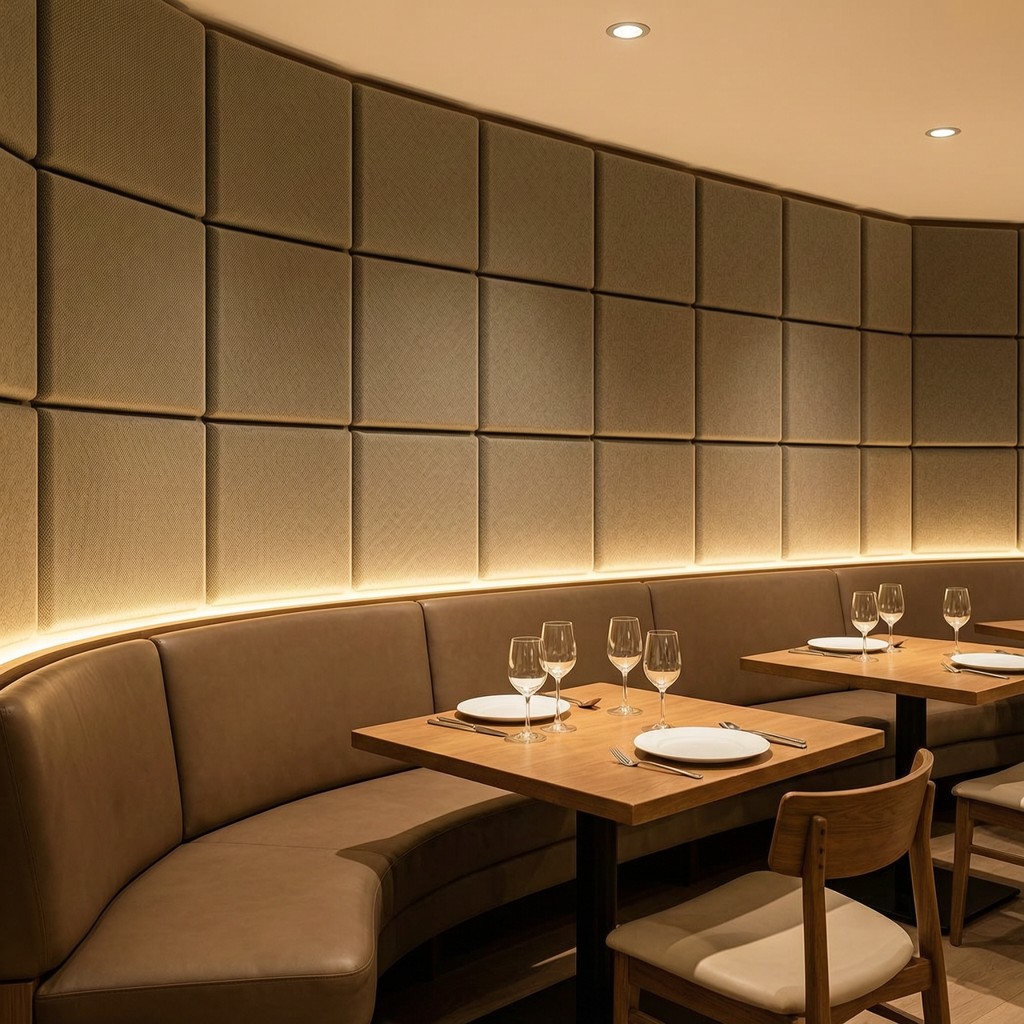
Fabric Acoustic Panels for Hospitality Interiors
Fabric acoustic panels are a practical option for restaurant and hospitality projects because they provide strong sound absorption while allowing design flexibility.
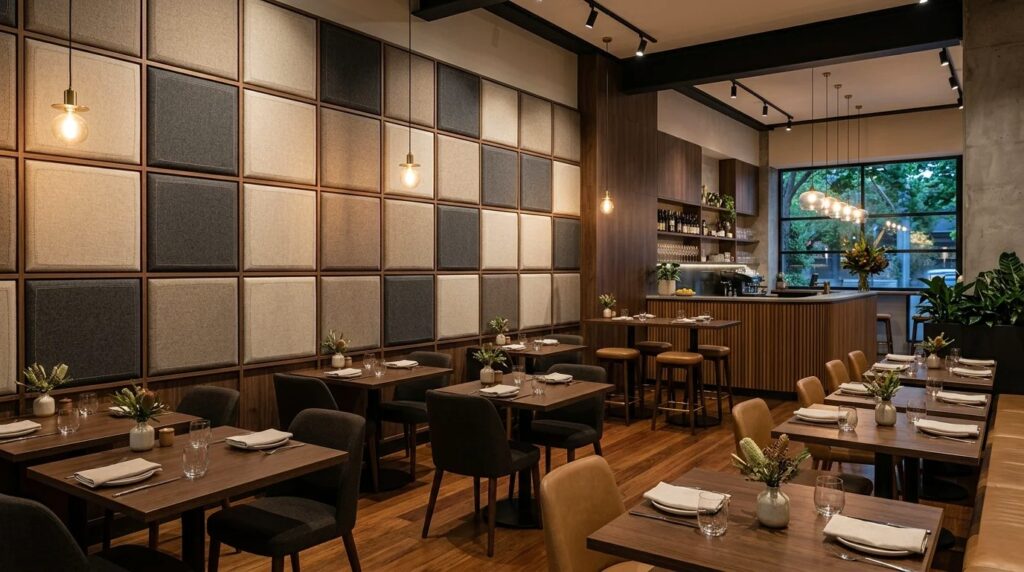
Panels can be selected in a range of colours, finishes and sizes to suit the interior scheme.
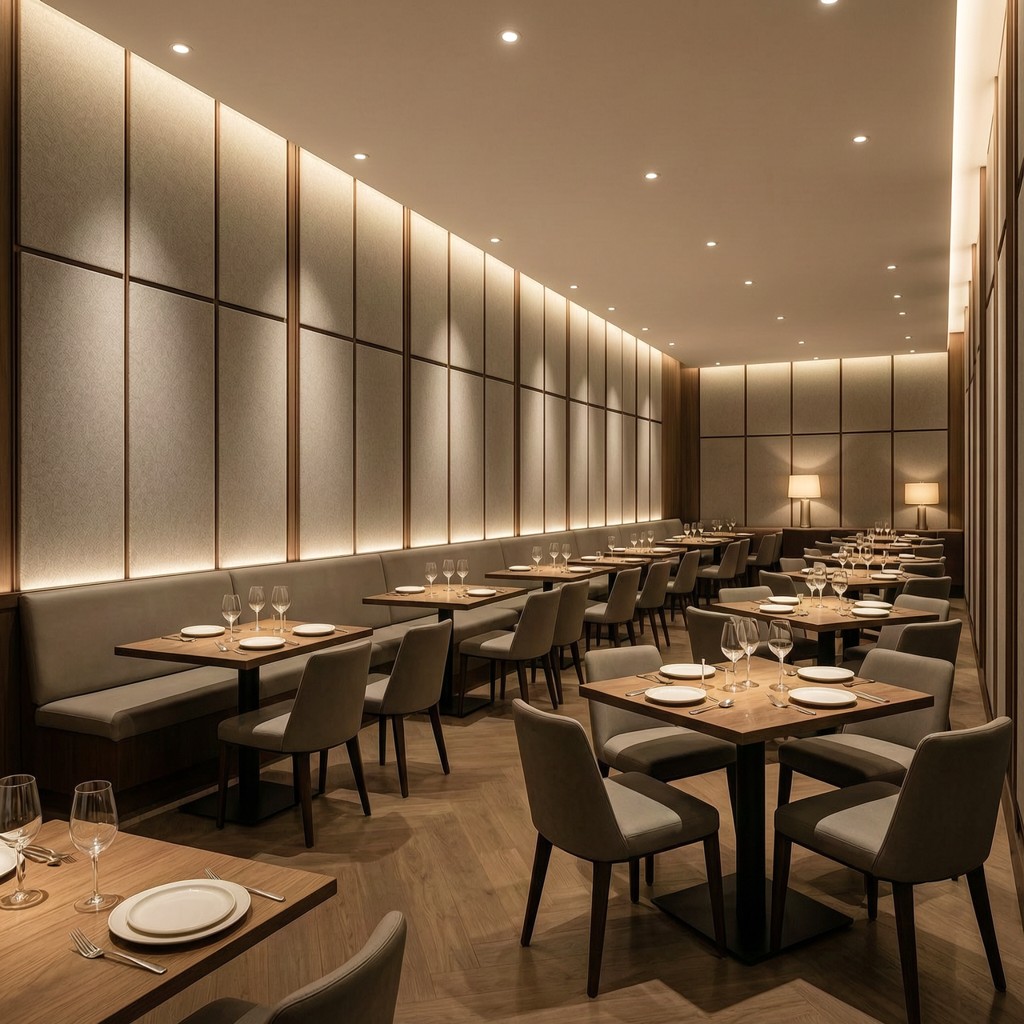
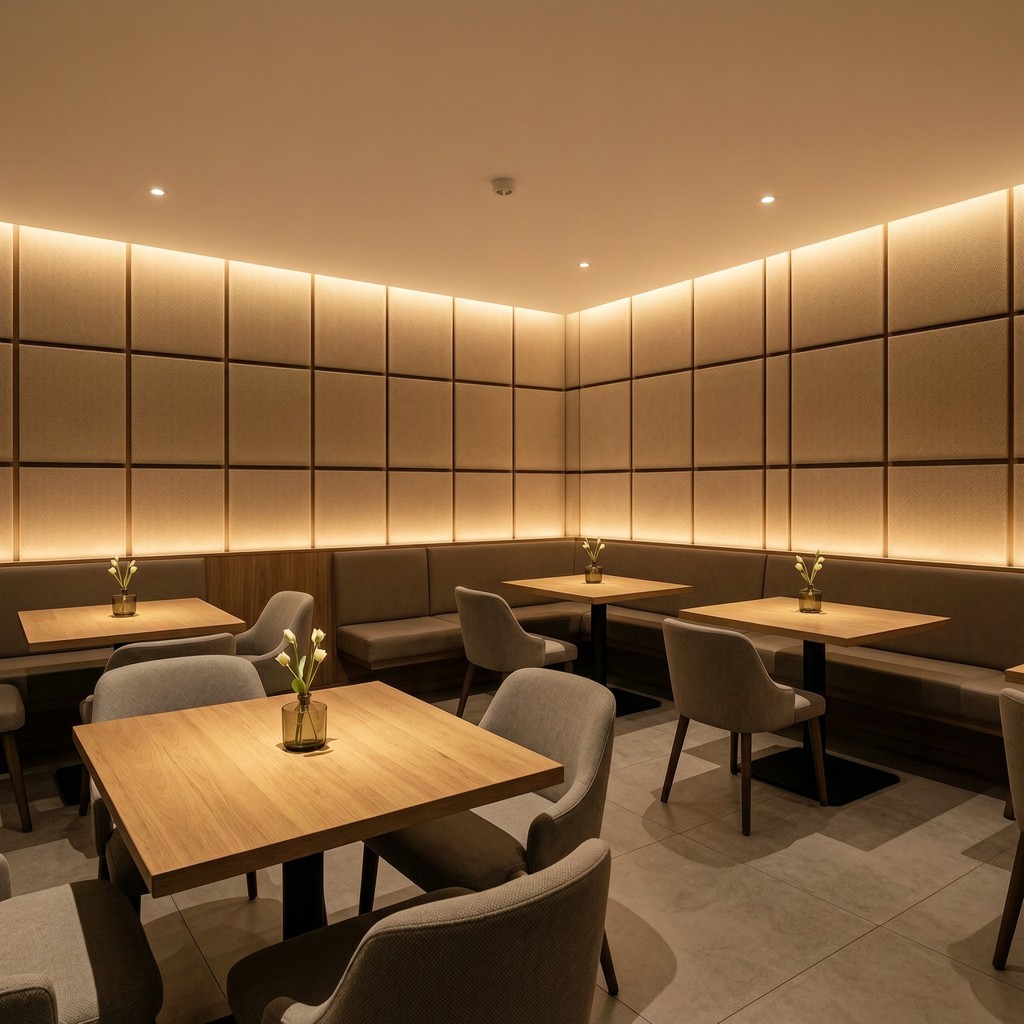
In dining areas, fabric panels are often used as wall features, booth surrounds, private dining room treatments or integrated panels within joinery and wall layouts. They can also help soften spaces that use a large amount of hard material.
Design Considerations for Hospitality Designers
When specifying acoustic panels for dining areas, designers should consider both acoustic performance and visual integration. The best result is usually achieved when acoustic treatment appears intentional rather than added after the restaurant is completed.
- The size and volume of the dining area
- The amount of hard surface material used
- Ceiling height and ceiling finish
- Table density and expected occupancy
- Background music levels
- Wall areas available for treatment
- Fire performance and maintenance requirements
- Colour and fabric selection
.
Balancing Atmosphere and Acoustic Comfort
Good hospitality acoustics are not about removing all sound. A restaurant should still feel active and welcoming.
However, when the room becomes too loud, customers may struggle to talk, staff may find service more difficult, and the overall dining experience can suffer.
Well-placed acoustic panels help provide a better balance. They allow the restaurant to retain its atmosphere while reducing the level of reflected noise that often causes discomfort.
Acoustic Panels for New and Existing Restaurants
For new hospitality projects, acoustic panels can be included during the design and documentation stage. This allows the panels to work with the interior layout, lighting, furniture and finishes.
For existing restaurants, acoustic panels can also be retrofitted to address noise issues after opening. Wall panels, ceiling panels and suspended acoustic elements can often be installed with limited disruption, depending on the site conditions.
Sontext Acoustic Solutions for Dining Areas
Sontext supplies acoustic panel systems suitable for restaurants, cafés, hotel dining rooms, clubs, bars and other hospitality environments.
Our fabric acoustic panels can be used to support both acoustic performance and interior design requirements in hospitality interiors.
For examples of how acoustic products can be used in hospitality interiors, visit our Hospitality Projects page.
Frequently Asked Questions
Do restaurant acoustic panels make a dining room too quiet?
No. The purpose of restaurant acoustic panels is to reduce excessive reflected sound, not remove the natural atmosphere of the space. A well-treated dining area can still feel active and welcoming.
Where should acoustic panels be placed in a restaurant?
Common locations include feature walls, booth seating areas, private dining rooms, ceilings and waiting areas. The best placement depends on the room size, layout and surface finishes.
Are fabric acoustic panels suitable for hospitality interiors?
Yes. Fabric acoustic panels are commonly used in hospitality interiors because they offer strong sound absorption and can be selected to suit the interior colour scheme.
Can acoustic panels be added to an existing restaurant?
Yes. Acoustic panels can often be retrofitted to existing restaurants, especially on walls or ceilings where suitable fixing points are available.
Why are modern restaurants often noisy?
Many modern restaurants use hard finishes such as concrete, glass, timber and tiles. These surfaces reflect sound, which can increase reverberation and make conversation more difficult.