
Acoustic Panels for TV Studios
TV studio acoustic panels help control sound reflections, improve speech clarity and support better recording conditions in broadcast environments.
Television studios require careful acoustic planning. Unlike standard office or meeting spaces, a studio must support clear voice recording, controlled sound movement and consistent audio quality across a range of production activities.
Hard walls, exposed ceilings, lighting rigs, glass viewing areas, control room windows and production equipment can all affect the way sound behaves inside the room. Without suitable acoustic treatment, reflected sound can interfere with speech, create unwanted room tone and make post-production more difficult.
For media studios, broadcast rooms and production spaces, fabric acoustic panels provide a practical way to control reverberation while maintaining a clean professional interior.
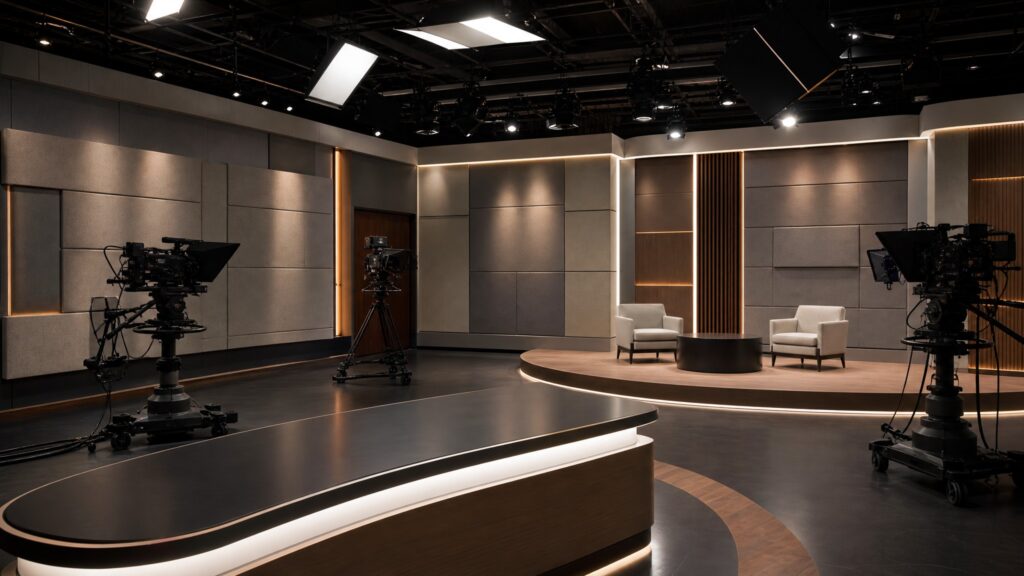
Why TV Studios Need Acoustic Treatment
Broadcast environments rely on clear and controlled sound. Even when high-quality microphones and recording equipment are used, the room itself still plays a major role in the final audio result.
In a poorly treated studio, sound can reflect between walls, ceilings and hard surfaces. This may create excessive reverberation, flutter echo or uneven sound levels across the room.
These issues can affect interviews, panel discussions, livestreams, news production, training videos, podcasts, webinars and internal corporate media. In some cases, audio problems may not be fully noticed until editing begins.
The Role of TV Studio Acoustic Panels
TV studio acoustic panels are used to absorb sound energy and reduce unwanted reflections inside the room. This helps create a more controlled acoustic environment for speech, presentation and recording.
The aim is not to remove all sound from the space. A studio still needs to feel natural on camera and comfortable for presenters, guests and production staff.
The objective is to reduce the level of reflected sound so microphones capture speech more clearly and the production team has better control over the recorded audio.
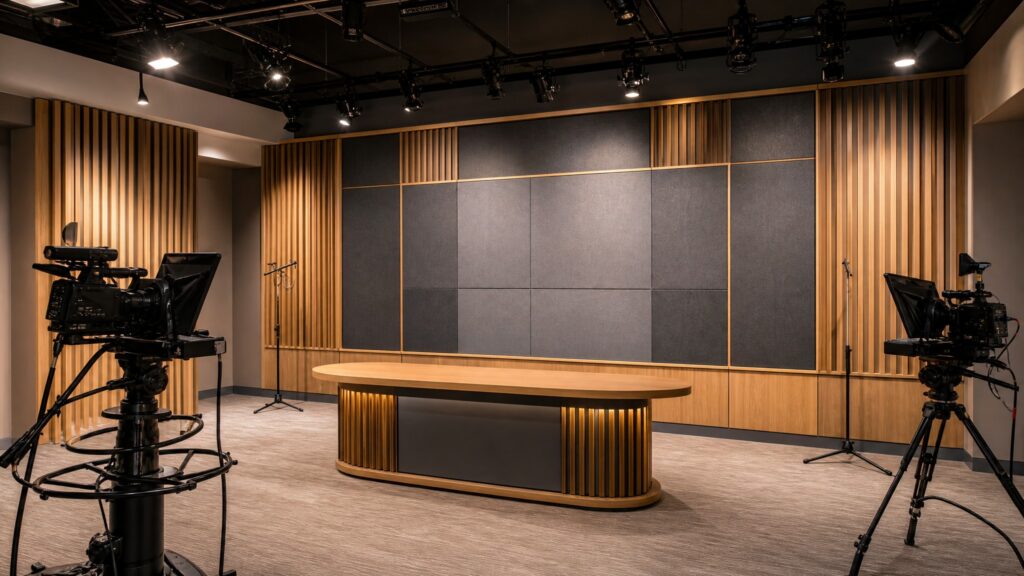
Where Acoustic Panels Can Be Used in TV Studios
Acoustic treatment can be included in several parts of a television studio or media production space. The right location will depend on the room size, wall layout, set design, ceiling services and camera angles.
| Studio Area | Acoustic Treatment Option | Practical Benefit |
|---|---|---|
| Presenter walls | Fabric acoustic wall panels | Helps reduce reflections close to microphones |
| Interview areas | Wall-mounted acoustic panels | Supports clearer speech between presenters and guests |
| Ceilings | Acoustic ceiling panels or suspended acoustic clouds | Useful where wall space is limited by sets or screens |
| Control rooms | Fabric wall panels and rear wall treatment | Assists with more consistent monitoring conditions |
| Podcast and livestream rooms | Fabric acoustic panels and corner treatment | Helps reduce room tone and echo during recording |
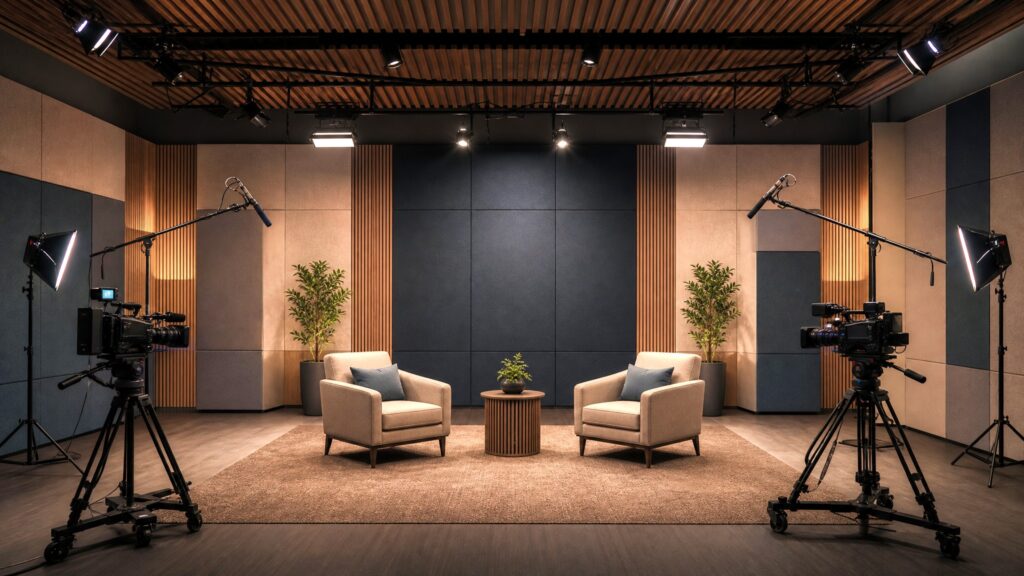
Fabric Panels for Broadcast Acoustics
Fabric acoustic panels are well suited to TV studios because they provide sound absorption while allowing flexibility in colour, size and layout.
In media spaces, acoustic panels often need to work with camera sightlines, lighting positions, set construction and brand colours. Fabric panels can be used as part of the visible studio background or placed outside the main camera frame to control reflections.
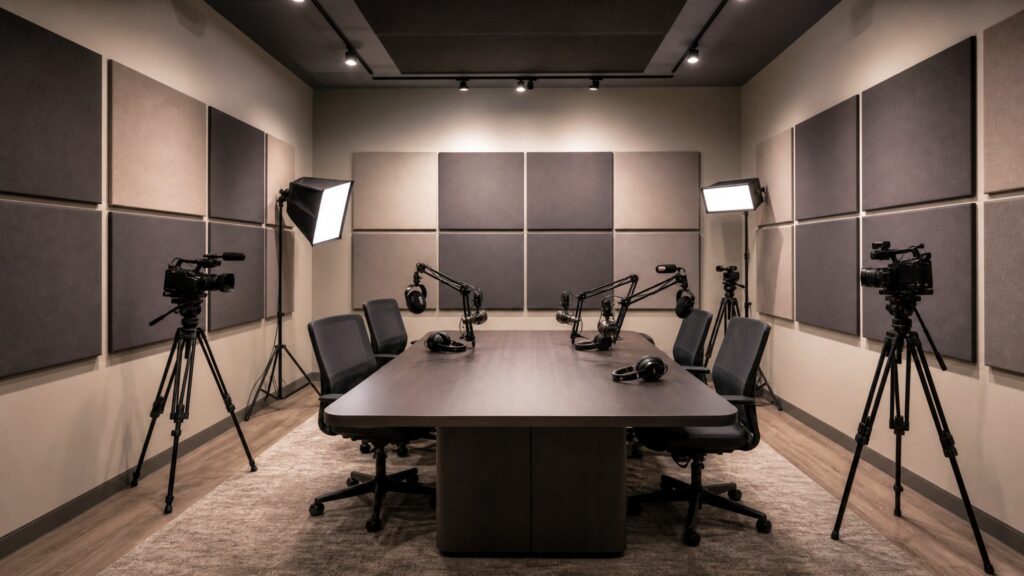
They are also useful in smaller media rooms where podcasts, webinars, training videos and internal communications are recorded. These spaces are often created inside existing offices, where hard walls and ceilings can create noticeable echo.
Design Considerations for Media Studios
When specifying acoustic panels for a television studio, the acoustic treatment should be planned alongside the production layout. This includes camera positions, microphone locations, lighting tracks, screens, set walls and furniture.
- Room size and ceiling height
- Microphone type and recording distance
- Camera angles and visible wall areas
- Lighting positions and ceiling services
- Control room windows or viewing panels
- Background set design
- Colour and fabric selection
- Fire performance and maintenance requirements
Acoustic Panels for New and Existing Studios
For new TV studios, acoustic panels can be included during the design and documentation stage. This allows the treatment to work with the set design, services, lighting and production requirements.
For existing studios, acoustic panels can often be retrofitted to improve recording conditions. Wall panels, ceiling panels and suspended acoustic elements may be added to reduce reverberation and improve speech clarity without major changes to the room structure.
Supporting Clearer Studio Audio
Good broadcast acoustics are about control. The room should support clean speech recording, reduce unwanted reflections and provide a reliable space for production teams.
Acoustic panels can help create a more predictable recording environment, whether the space is used for television production, livestreaming, podcasting, interviews, webinars or corporate video content.
Sontext Acoustic Solutions for TV Studios
Sontext supplies acoustic panel systems suitable for television studios, broadcast rooms, podcast rooms, livestream spaces, training rooms and media production areas.
Our fabric acoustic panels can be used to support broadcast acoustics while working with the visual requirements of studio interiors.
For related acoustic solutions, visit our Studio Acoustic page.
Frequently Asked Questions
Why do TV studios need acoustic panels?
TV studios need acoustic panels to reduce reflected sound, control reverberation and support clearer speech recording. This helps improve the quality of interviews, presentations, livestreams and broadcast content.
Where should acoustic panels be placed in a television studio?
Common locations include presenter walls, interview areas, rear walls, side walls, ceilings and control rooms. The best placement depends on room size, microphone position, camera angles and set layout.
Are fabric acoustic panels suitable for broadcast studios?
Yes. Fabric acoustic panels are commonly used in broadcast and media studios because they provide sound absorption and can be selected to suit the studio interior.
Can acoustic panels be added to an existing TV studio?
Yes. Acoustic panels can often be retrofitted to existing studios. Wall-mounted panels and ceiling-mounted acoustic treatments can improve recording conditions without major structural work.
Do acoustic panels affect the appearance of a studio?
Acoustic panels can be designed to suit the visual requirements of the studio. They can be placed inside or outside camera view and selected in colours that work with the set design.