
Acoustic Panels for Home Studios
Improve recording clarity, monitoring accuracy and acoustic comfort with fabric acoustic panels designed for home music studios.
Creating a Better Acoustic Environment for Recording and Mixing
A home studio can contain quality microphones, studio monitors, audio interfaces and recording equipment, but the room itself still has a major influence on the sound being recorded and reproduced.
Bedrooms, spare rooms, garages and home offices are generally designed as living spaces rather than recording environments. Hard plaster walls, ceilings, windows, desks and flooring reflect sound around the room. These reflections can be captured by microphones or reach the listener shortly after the direct sound from the studio monitors.
The result may be flutter echo, excessive reverberation, poor vocal definition, inaccurate stereo imaging and mixes that sound different when played in another room.
Home studio acoustic panels absorb reflected sound before it continues moving between the room surfaces. Correctly positioned panels can create a more controlled environment for recording vocals, instruments, podcasts and voiceovers, while also improving the accuracy of mixing and monitoring.
The objective is not to remove all natural sound from the room. Effective acoustic treatment should reduce disruptive reflections while retaining a balanced and comfortable studio environment. The panel quantity, thickness and placement should therefore reflect the room dimensions, equipment layout and intended use of the studio.
Why Home Studios Become Acoustically Difficult
Small residential rooms often contain several parallel, reflective surfaces positioned close together. Sound from a voice, musical instrument or loudspeaker can repeatedly reflect between these surfaces before gradually losing energy.
Common home studio acoustic problems include:
- Flutter echo between parallel walls
- Strong reflections from side walls and ceilings
- Room sound being captured by microphones
- Poor vocal and instrument definition
- Unclear stereo imaging at the mixing position
- Harsh or tiring listening conditions
- Recordings that require excessive processing
- Mixes that do not translate accurately to other listening environments
Carpet, curtains, furniture and soft furnishings may provide some absorption, but their acoustic effect is generally uneven. They often absorb higher frequencies while providing limited control across the broader frequency range.
Electronic room correction can help compensate for some monitoring irregularities, but it does not prevent reflected sound from reaching microphones or the listener. Physical acoustic treatment remains an important part of creating a controlled studio environment.
How Home Studio Acoustic Panels Control Reflections and Reverberation
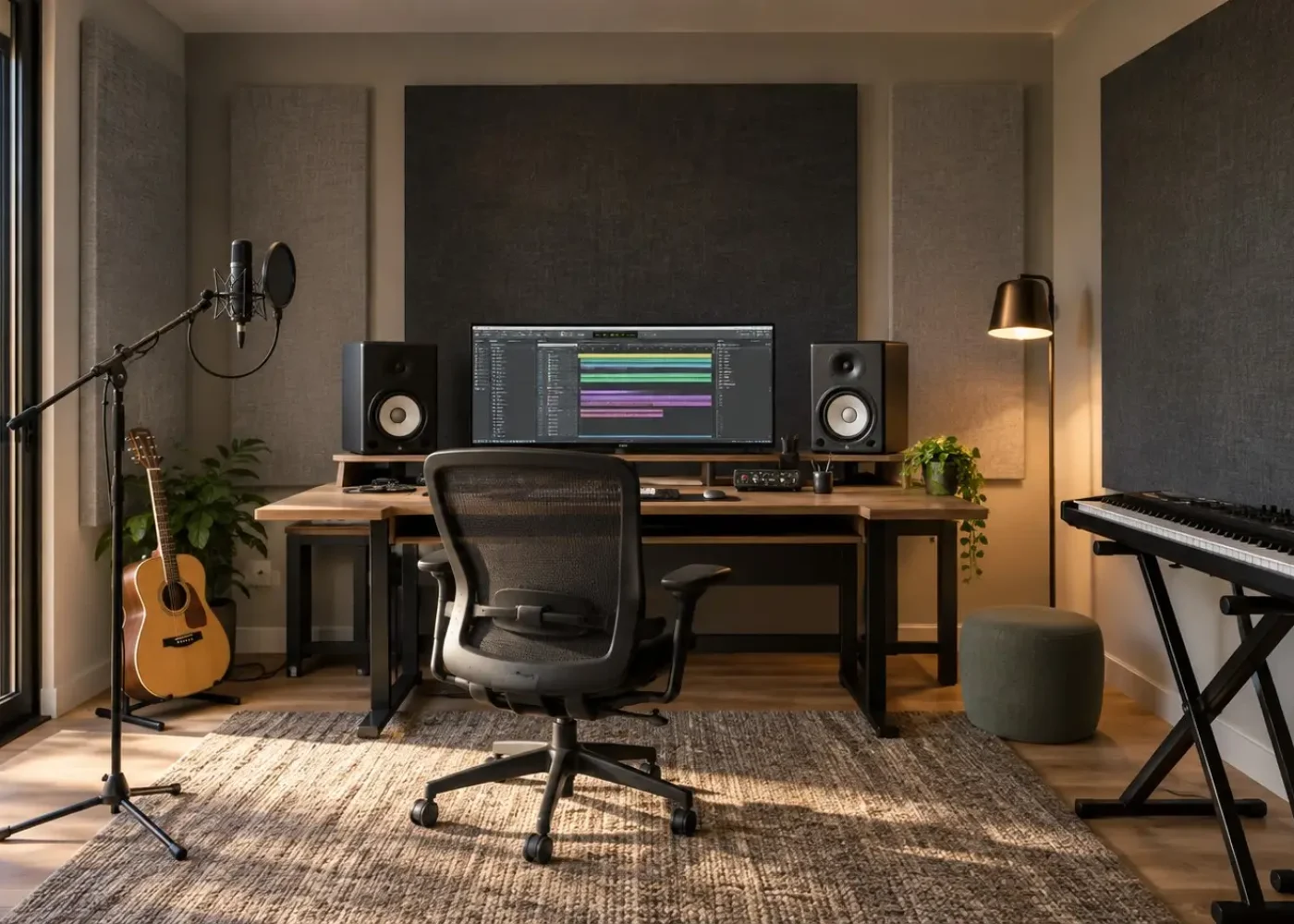
Fabric acoustic panels contain a sound-absorbing core covered with an acoustically transparent fabric finish. When reflected sound reaches the panel, part of its energy enters the absorber rather than being reflected directly back into the room.
Panels are normally positioned where the strongest reflections occur, including:
- Side walls beside the mixing position
- The wall behind the studio monitors
- The rear wall behind the listener
- The ceiling above the desk and mixing position
- Walls surrounding vocal or instrument recording areas
Treating these locations can reduce early reflections, improve stereo definition and limit the amount of unwanted room sound captured during recording.
Acoustic treatment should not be confused with soundproofing. Acoustic panels improve sound conditions inside a room. Soundproofing requires changes to the walls, ceiling, floor, doors, windows and building junctions to reduce sound transmission into or out of the studio.
Home Studio Acoustic Panel Applications
| Studio Area | Typical Acoustic Problem | Suggested Treatment | Intended Benefit |
|---|---|---|---|
| Side Walls | Early reflections reaching the listener | Panels at the first reflection points | Clearer stereo imaging |
| Monitor Wall | Reflections behind and around the speakers | Wall-mounted absorption behind the monitors | Improved monitoring control |
| Rear Wall | Reflected sound returning towards the listener | A broader area of acoustic treatment | Reduced reverberation |
| Ceiling | Reflections between the desk and ceiling | Suspended ceiling panels or acoustic clouds | Better vertical reflection control |
| Vocal Recording Area | Room sound entering the microphone | Targeted panels around the recording position | Clearer vocal recordings |
| Instrument Area | Harsh reflections affecting recorded tone | Wall and ceiling absorption near the instrument | More controlled recordings |
Serenity Fabric Acoustic Panels for Home Studios
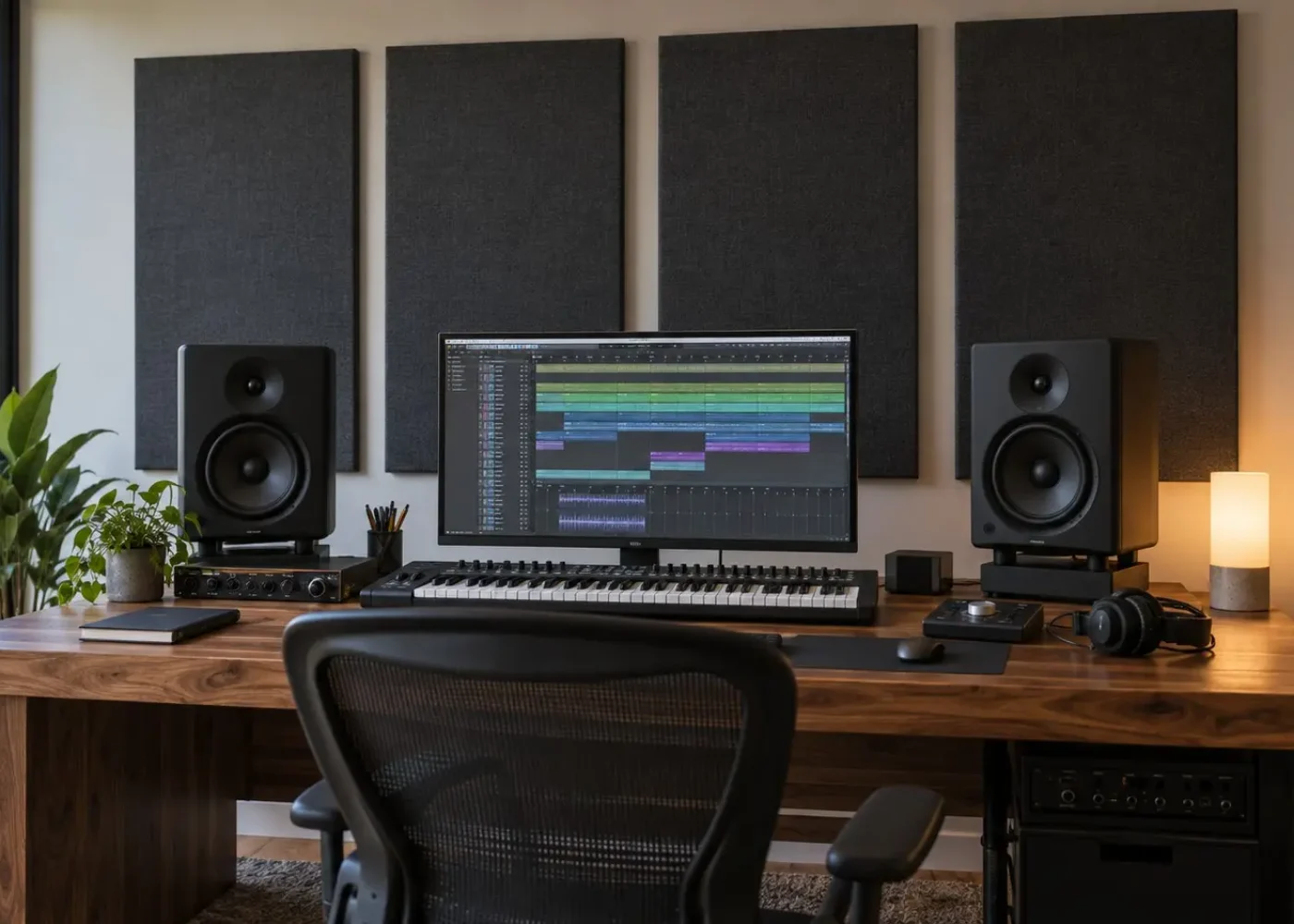
Sontext Serenity Fabric Acoustic Panels provide a practical wall and ceiling treatment for home recording studios, music production rooms, podcast studios and critical listening spaces.
The fabric finish allows the panels to be coordinated with the studio interior, equipment and surrounding residential finishes. Panels can be installed individually or arranged as grouped treatments across the areas where acoustic absorption is required.
Depending on the studio design, Serenity panels may be:
- Mounted horizontally or vertically on walls
- Positioned beside the mixing desk
- Installed behind studio monitors
- Grouped across a rear wall
- Suspended above the main listening position
- Installed around vocal and instrument recording areas
The appropriate panel size, thickness and quantity will depend on the dimensions and acoustic requirements of the room.
Planning Acoustic Treatment for a Home Studio
Home studio treatment should begin with the room layout and intended use of the space. A room used mainly for voice recording may require a different treatment arrangement from a studio used for mixing, music production or instrument recording.
Important planning considerations include:
- Room length, width and ceiling height
- The location of the mixing desk and studio monitors
- The distance between the listener and surrounding walls
- Microphone and instrument positions
- Doors, windows and built-in furniture
- Existing carpet, curtains and soft furnishings
- Electrical outlets, lighting and ventilation
- The required balance between absorption and natural room character
The mixing position should be arranged as symmetrically as practical. Panels can then be positioned to control reflections from corresponding wall and ceiling locations.
Low-frequency problems may require deeper absorbers, corner treatment or specialist acoustic design. Standard fabric panels are primarily used to control reflected sound and reverberation through the middle and higher frequency ranges.
A Clearer Environment for Recording, Mixing and Listening
A controlled acoustic environment can make recording and production work more consistent and less tiring.
Potential benefits of correctly planned home studio acoustic treatment include:
- Clearer vocal and instrument recordings
- Reduced flutter echo and ringing
- Improved stereo imaging
- More accurate monitoring decisions
- Less unwanted room sound entering microphones
- Greater confidence when adjusting equalisation and effects
- A more comfortable environment during longer recording sessions
Acoustic panels cannot correct every room problem, but they provide an important foundation for improving the performance of a home music studio.
Acoustic Panels for Existing Rooms and New Home Studios
Fabric acoustic panels can be incorporated into a new studio design or installed later as an upgrade to an existing bedroom, office, garage or music room.
In an existing studio, panels can normally be positioned around the current desk, monitors, microphones and furniture without extensive structural alterations. This allows the treatment to address the most important reflection points while retaining the existing room layout.
For a new home studio, acoustic treatment can be coordinated with:
- Wall and ceiling construction
- Electrical and data services
- Lighting positions
- Ventilation systems
- Doors and windows
- Built-in desks and equipment racks
- Studio monitor and microphone locations
Early coordination can improve panel placement and reduce conflicts with other room services and finishes.
Plan the Acoustic Treatment for Your Home Studio
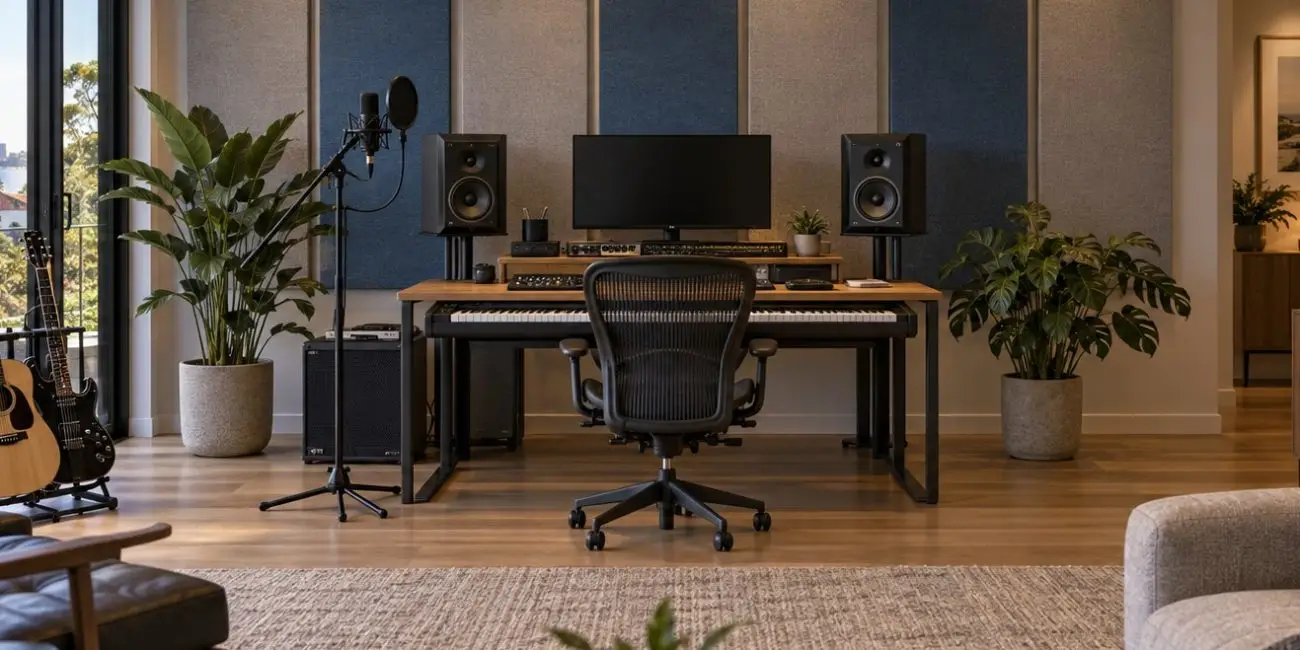
Sontext supplies fabric acoustic panels for home recording studios, music production rooms, podcast spaces and other critical listening environments.
Explore the Sontext studio acoustic range or contact our team to discuss suitable wall and ceiling panel options for your room.
Frequently Asked Questions About Home Studio Acoustic Panels
1. Do acoustic panels improve the sound in a home studio?
Yes. Acoustic panels absorb reflected sound within the room, helping to reduce excessive reverberation and strong early reflections. This can provide a more controlled acoustic environment for recording, mixing, monitoring and music production.
2. Where should acoustic panels be installed in a home studio?
Common locations include the side-wall reflection points, the wall behind or in front of the listening position, and other reflective surfaces contributing to excessive reverberation. The appropriate location and quantity will depend on the room dimensions, layout, finishes and intended use.
3. Are fabric acoustic panels suitable for home recording studios?
Yes. Fabric acoustic panels are well suited to home studios because they provide effective sound absorption while offering a professional architectural finish. Sontext fabric acoustic panels are available in a range of sizes, thicknesses and fabric finishes to suit different studio interiors.
4. Will acoustic panels soundproof my home studio?
No. Acoustic treatment and sound insulation perform different functions. Acoustic panels primarily control sound reflections and reverberation within the studio. Reducing sound transmission into or out of the room generally requires appropriate wall, ceiling, floor, door and glazing construction.
5. How many acoustic panels does a home studio need?
There is no single quantity suitable for every home studio. The amount of acoustic treatment depends on factors including room size, ceiling height, existing surface finishes, furniture, studio layout and the required acoustic outcome. Sontext can provide practical product information to assist with selecting suitable acoustic treatment.