
How to Choose the Best Acoustic Panels for Modern Offices in Australia
Choosing the right office acoustic panels can reduce reverberation, improve speech clarity and create more comfortable working environments without compromising modern workplace design.
Choosing Acoustic Panels for Today’s Office Environment
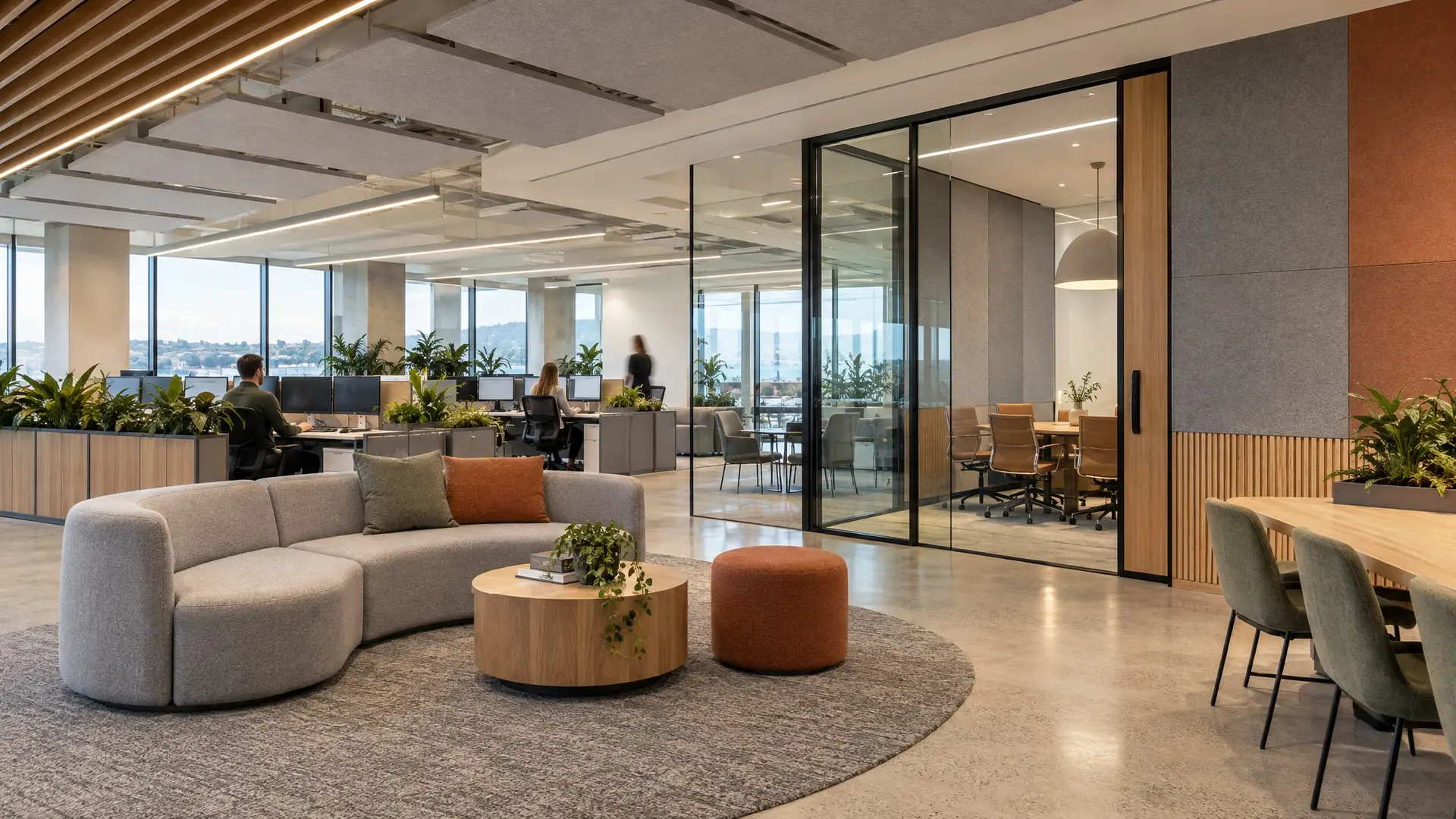
Modern Australian offices are increasingly designed around open-plan work areas, meeting rooms, collaboration spaces, breakout zones and flexible working environments. While these layouts provide greater flexibility, they can also create difficult acoustic conditions.
Hard surfaces such as glass partitions, plasterboard walls, exposed concrete, timber flooring, desks and ceilings reflect sound rather than absorbing it. Conversations, telephone calls, video meetings and general workplace activity can therefore travel further through the office and increase overall background noise.
Office acoustic panels introduce sound-absorbing surfaces into the workplace, helping to reduce reverberation and improve acoustic comfort. However, there is no single panel type that is suitable for every office.
The best acoustic solution depends on the room layout, available wall and ceiling space, the type of noise being generated, the required acoustic performance and the architectural design of the workplace.
Wall-mounted fabric panels may be ideal for meeting rooms and boardrooms, while open-plan offices with limited wall space may benefit from suspended ceiling panels, baffles or lightweight acoustic systems. Understanding these differences makes it easier to select an acoustic treatment that works with both the room and the interior design.
.
Why Modern Offices Become Acoustically Difficult
Contemporary office design frequently uses large open spaces and hard architectural finishes. These materials can create attractive and practical interiors, but acoustically they may allow sound to reflect repeatedly around the workplace.
Common office acoustic problems include:
- Conversations travelling across open-plan work areas
- Telephone calls distracting nearby staff
- Reverberation from hard walls, ceilings and glazing
- Poor speech clarity in meeting rooms
- Difficulty hearing participants during video conferences
- High noise levels around collaboration and breakout areas
- Limited speech privacy between neighbouring workstations
- Acoustic fatigue during long working periods
The challenge is often greater in offices with exposed ceilings, large areas of glass and minimal soft furnishings.
Simply adding partitions does not necessarily solve the problem. Effective office acoustics normally require a combination of sound absorption, appropriate space planning and, where required, physical separation between activities.
How Office Acoustic Panels Improve Sound Control
Office acoustic panels absorb a proportion of the sound energy that would otherwise reflect from hard surfaces back into the workplace.
Reducing these reflections can help control reverberation and prevent sound levels from building unnecessarily throughout the room.
Acoustic treatment may be installed on:
- Walls beside open-plan workstations
- Walls within meeting rooms and boardrooms
- Ceilings above work areas
- Reception and waiting areas
- Collaboration and breakout spaces
- Circulation zones
- Walls behind video conferencing positions
- Upper wall areas where usable floor-level wall space is limited
The objective is not to eliminate all sound. A successful office should still support communication and collaboration. Acoustic treatment is used to create a better balance between useful communication and unwanted reflected sound.
Choosing Acoustic Panels for Different Office Areas
| Office Area | Typical Acoustic Problem | Suggested Treatment | Primary Benefit |
|---|---|---|---|
| Open-Plan Offices | Conversations, phone calls and general background noise | Wall panels, ceiling panels, baffles and acoustic screens | Reduced reverberation and distraction |
| Meeting Rooms | Poor speech clarity and echo | Fabric wall panels and ceiling treatment | Clearer conversation and video meetings |
| Boardrooms | Reflections from tables, glass and hard walls | Architectural wall or ceiling acoustic panels | Improved speech intelligibility |
| Reception Areas | High visitor activity and hard decorative finishes | Decorative fabric or acoustic art panels | Improved comfort and reduced reflected sound |
| Breakout Areas | Informal conversations affecting nearby work areas | Ceiling baffles, wall panels and screens | Better acoustic separation between zones |
| Private Offices | Echo and poor video conferencing acoustics | Targeted wall treatment | Clearer speech and improved comfort |
Choosing the Right Sontext Office Acoustic Panel
Different parts of an office may require different acoustic products. Sontext manufactures a range of wall and ceiling systems that can be selected according to the required acoustic performance, installation method and interior design.
Serenity Fabric Acoustic Panels
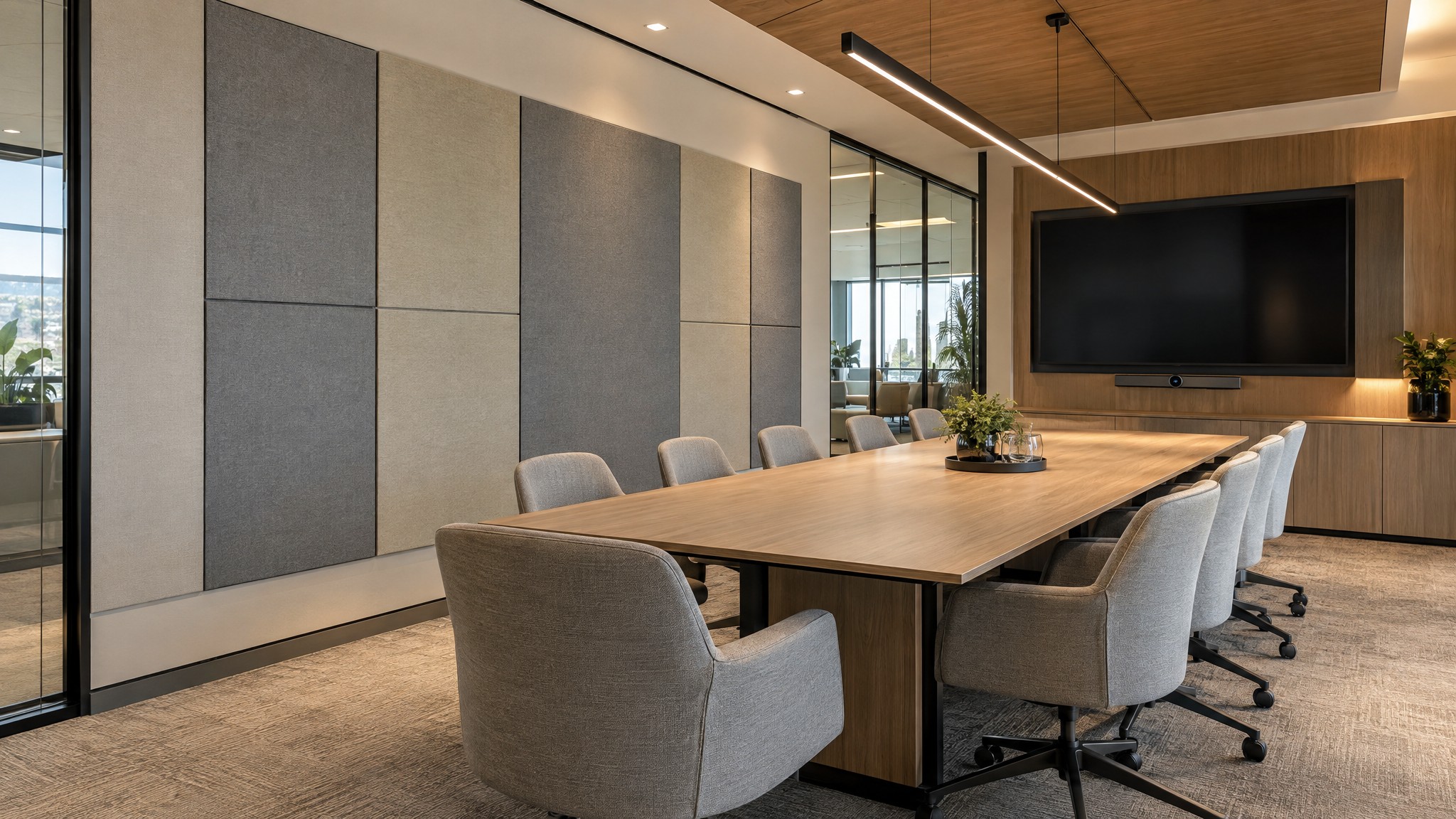
Serenity Fabric Acoustic Panels are suited to walls in meeting rooms, boardrooms, reception areas, offices and open-plan workplaces. The fabric finish allows designers to coordinate panel colours and textures with the surrounding interior.
Serenity panels can be supplied in different thicknesses and custom sizes to suit the acoustic and architectural requirements of the project.
SerenityLite Acoustic Panels
SerenityLite provides a lightweight alternative for wall and ceiling applications. The panels are particularly useful where reduced panel weight or simple ceiling installation is important.
Acoustic Ceiling Panels and Baffles
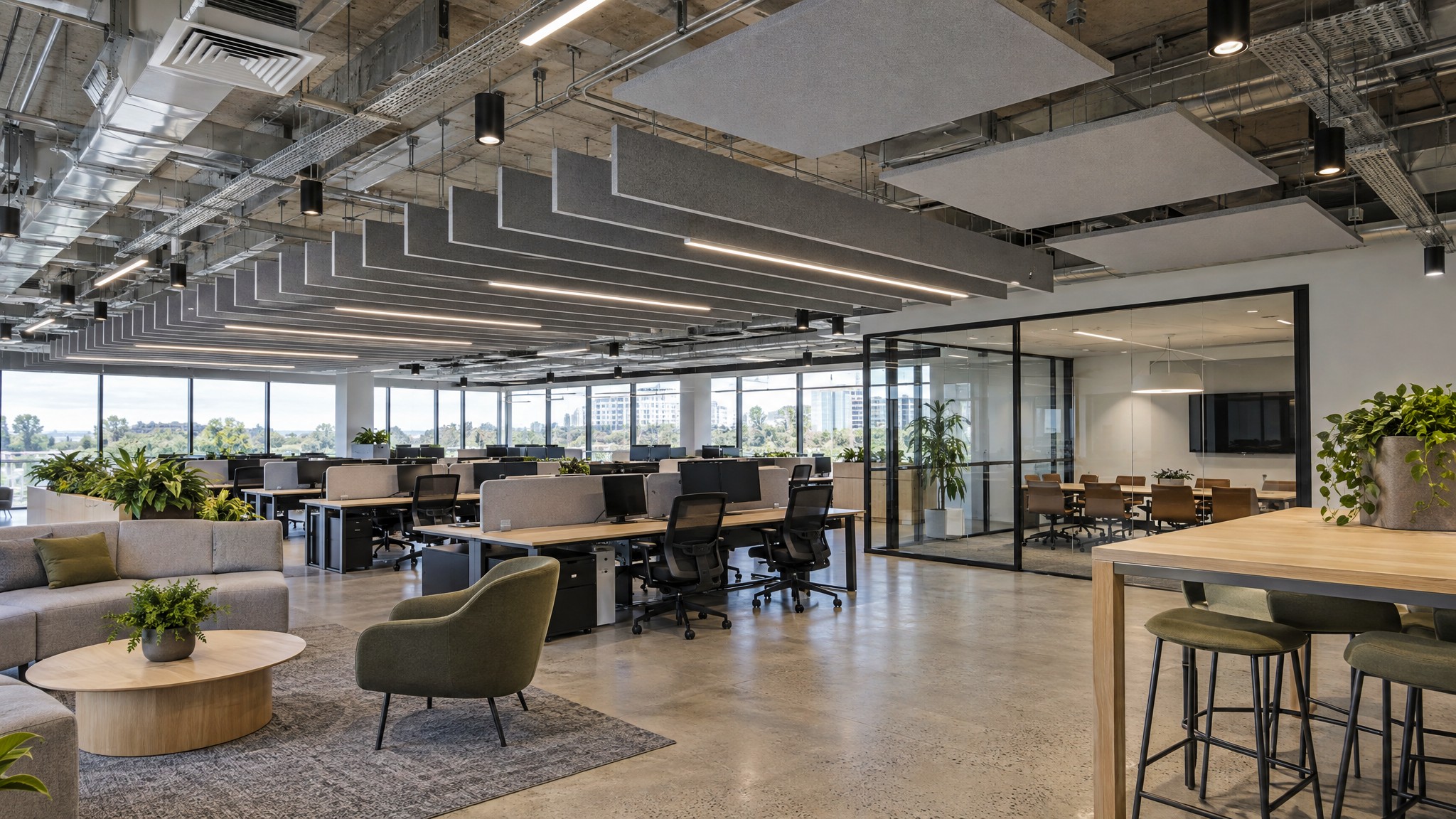
Where wall areas are occupied by glazing, storage, screens or furniture, ceiling treatment can provide an effective method of introducing additional acoustic absorption.
Suspended panels, clouds and baffles can also become part of the interior design while helping control sound across larger open-plan areas.
What Architects and Office Designers Should Consider
Selecting office acoustic panels should begin with the acoustic problem rather than simply choosing a panel based on appearance.
Important considerations include:
- Room dimensions and ceiling height
- The amount of glass, concrete and other reflective finishes
- Number and density of workstations
- Location of collaboration and breakout areas
- Meeting and video conferencing requirements
- Available wall and ceiling areas
- Lighting, sprinklers, air-conditioning and other ceiling services
- Required panel thickness and acoustic performance
- Fabric colour, texture and architectural finish
- Fire and building compliance requirements
Panel location is just as important as panel selection. A large amount of absorption installed in the wrong area may be less effective than a smaller amount of treatment positioned where significant reflections occur.
For larger workplaces, acoustic treatment should also be considered alongside workstation planning, screening, quiet rooms and the separation of noisy and quiet activities.
.
Creating a More Comfortable Workplace
Good office acoustics are about creating an environment in which people can communicate when required without unnecessary sound dominating the workplace.
Correctly planned acoustic treatment can help provide:
- Reduced reverberation in open work areas
- Clearer speech in meeting rooms and boardrooms
- Better conditions for video conferencing
- Reduced distraction from surrounding conversations
- More comfortable collaboration areas
- Improved acoustic conditions in reception and waiting spaces
- Greater flexibility in modern open-plan workplace design
The goal is not to make an office silent. A workplace should retain an appropriate level of activity while preventing excessive reflected sound from making the environment unnecessarily noisy or tiring.
Office Acoustic Panels for New Fitouts and Existing Workplaces
Office acoustic panels can be incorporated during a new commercial fitout or retrofitted into an existing workplace where noise and reverberation have become a problem.
For new offices, acoustic treatment can be coordinated with:
- Workstation layouts
- Meeting room locations
- Lighting systems
- Air-conditioning and mechanical services
- Ceiling grids
- Glass partitions
- Joinery and storage
- Corporate colours and interior finishes
Existing offices can often be improved without major reconstruction. Wall-mounted panels can be introduced into available wall areas, while lightweight ceiling panels and suspended systems can provide additional absorption where wall space is limited.
This makes acoustic treatment suitable for both complete office refurbishments and targeted upgrades to individual problem areas.
Choose the Right Acoustic Panels for Your Office
Sontext manufactures acoustic wall and ceiling solutions for open-plan offices, meeting rooms, boardrooms, reception areas and other commercial workplace environments.
Whether you are designing a new office or improving an existing workplace, our team can assist with panel types, sizes, finishes and acoustic treatment options.
Frequently Asked Questions About Office Acoustic Panels
What are the best acoustic panels for an office?
The best acoustic panels depend on the office layout and the source of the acoustic problem. Fabric wall panels are well suited to meeting rooms, boardrooms and available wall areas, while ceiling panels and baffles can be useful in open-plan workplaces where wall space is limited.
Where should acoustic panels be installed in an office?
Common locations include walls beside workstations, meeting room walls, ceilings above open-plan work areas, reception areas and breakout spaces. The best position depends on the room layout and the reflective surfaces within the space.
Do acoustic panels reduce office noise?
Acoustic panels reduce reflected sound and reverberation within a room. This can reduce the build-up of background noise and improve acoustic comfort, although panels do not completely block sound travelling between separate rooms.
Are acoustic wall panels or ceiling panels better for offices?
Neither option is universally better. Wall panels are effective where suitable wall area is available, while ceiling panels and baffles are useful where walls contain glazing, storage or displays. Many offices benefit from a combination of both.
Can office acoustic panels be retrofitted?
Yes. Acoustic wall panels, ceiling panels and suspended treatments can generally be added to existing offices without major structural changes, making them suitable for workplace acoustic upgrades.