
Do Fabric Acoustic Panels Reduce Echo?
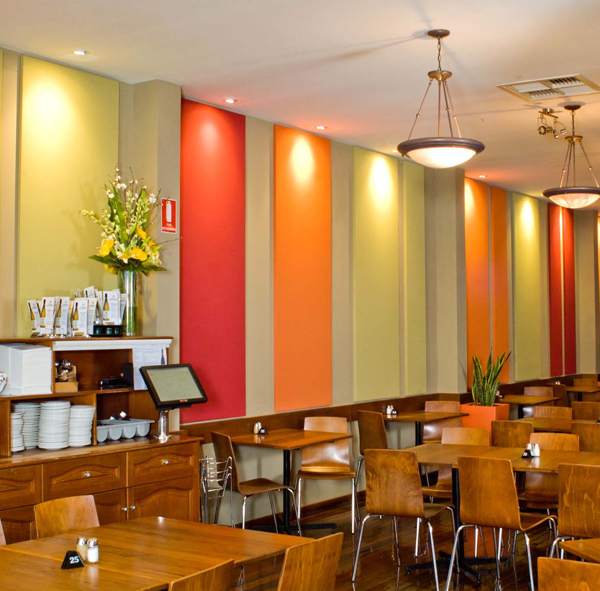
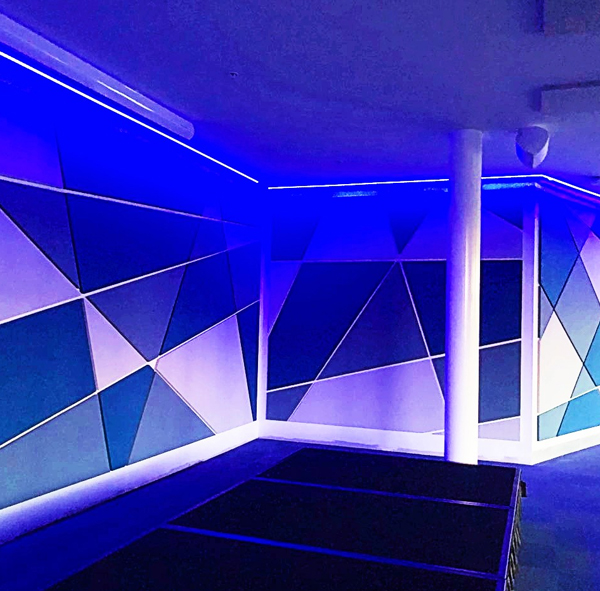
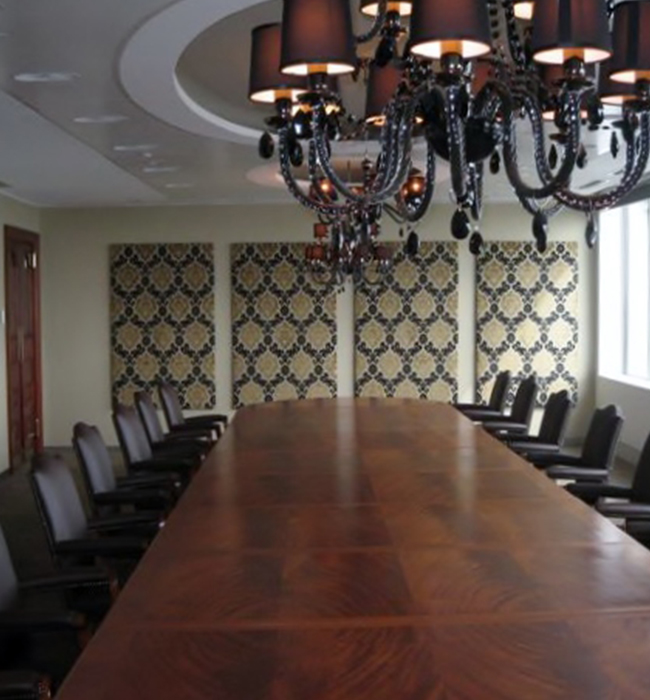
Yes. Fabric acoustic panels are one of the most effective ways to reduce echo and improve clarity in rooms where people speak, meet, learn or perform. Echo happens when sound reflects off hard surfaces such as plasterboard, concrete, glass and timber. By absorbing these reflections, fabric acoustic panels help create a clearer, more comfortable acoustic environment.
How Fabric Acoustic Panels Reduce Echo
Echo occurs when sound bounces repeatedly around a room. Fabric acoustic panels absorb part of the sound energy instead of reflecting it. This reduces reverberation time, which makes speech easier to understand and reduces listener fatigue.
Panels such as Serenity Fabric Acoustic Panels work by allowing sound to pass through the fabric into a sound-absorbing acoustic core. Inside the core, sound energy dissipates through friction, reducing the echo that would normally remain in the room.
Where Echo Problems Are Most Noticeable
Echo is common in rooms with hard, reflective surfaces and minimal soft furnishings. Typical examples include:
- Boardrooms and meeting rooms
- Classrooms and lecture theatres
- Open-plan offices and breakout spaces
- Worship centres and halls
- Studios and rehearsal rooms
How Many Panels Do You Need to Reduce Echo?
The amount of treatment depends on the room size, ceiling height and how the space is used. A useful guideline is to cover around 20–30% of the hard wall and ceiling areas with acoustic panels.
For a more precise recommendation, the Sontext team can review plans, room images or measured dimensions.
Best Places to Install Panels for Echo Control
For effective echo reduction, place fabric acoustic panels at key reflection points:
- Side walls near seating or desks
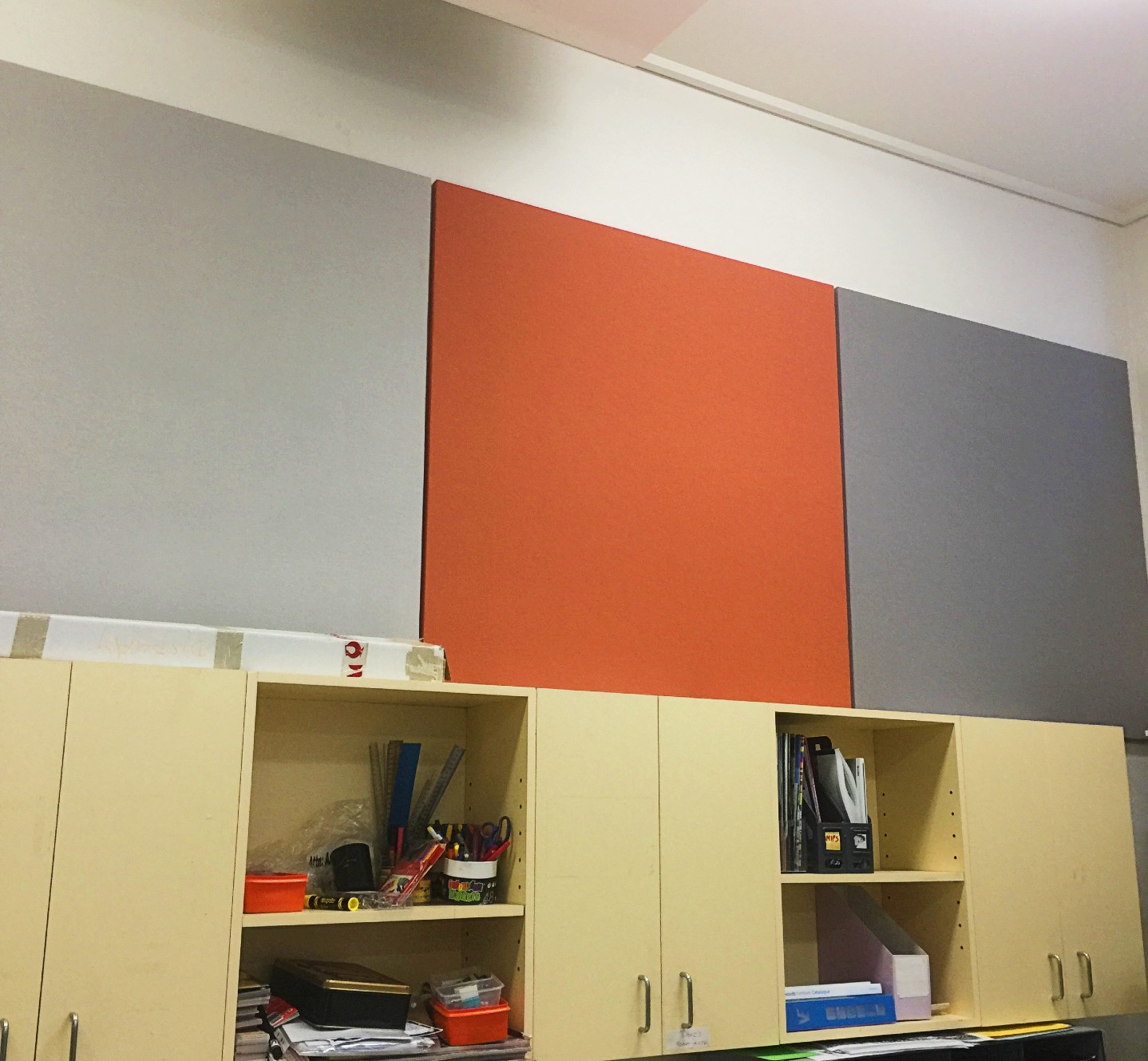
- Walls behind presenters or display screens
- Rear walls to control delayed reflections
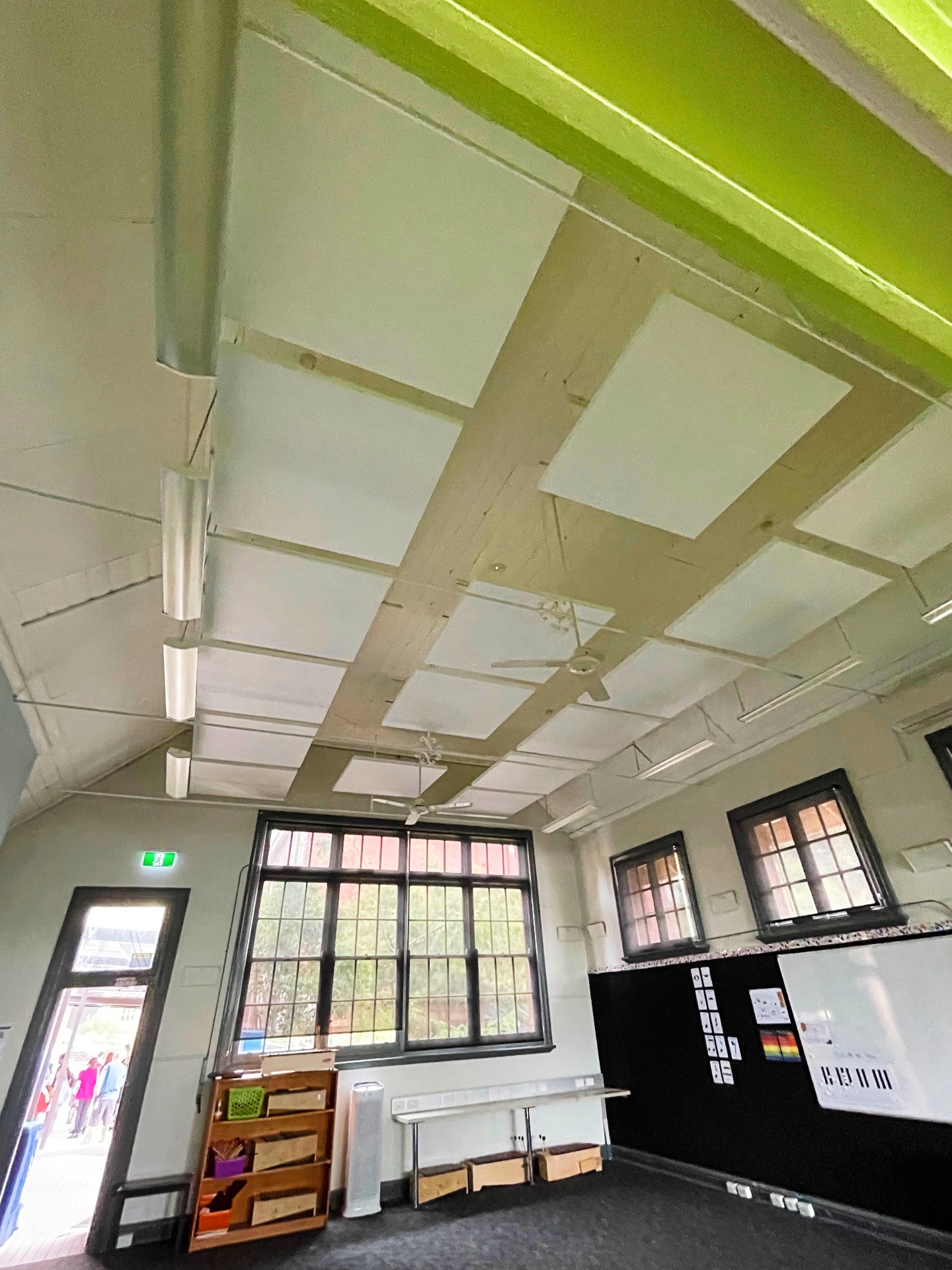
- Ceilings for balanced absorption across the whole room
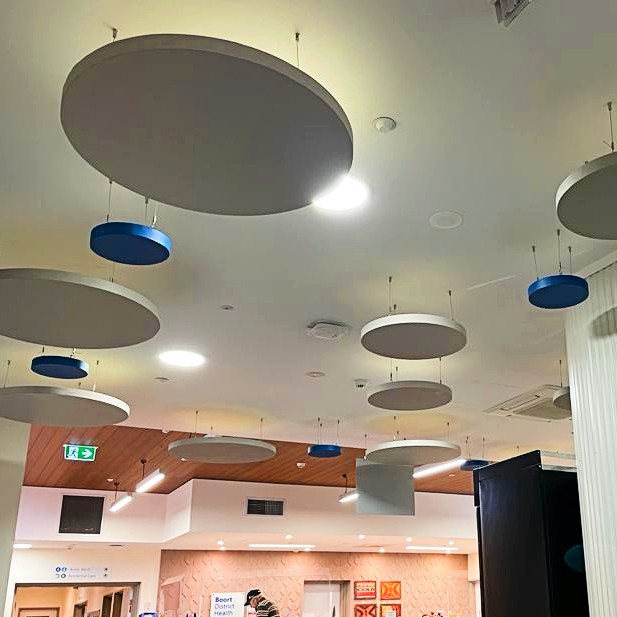
Adding ceiling panels or acoustic clouds provides even greater improvement, especially in rooms with high ceilings.
Recommended Sontext Products for Echo Reduction
- Serenity Fabric Acoustic Panels – ideal for wall treatment and speech clarity.
- Serenity Acoustic Art Panels – printed designs that combine acoustic performance with visual impact.
- Complementary ceiling panel options for full-room control.
Clearer Sound, Better Communication
Echo makes conversations hard to follow and creates discomfort in busy or shared spaces. By adding the right number of fabric acoustic panels in the correct locations, you can dramatically improve how a room sounds and feels.
Contact Sontext to discuss echo-control options for your space or request a panel layout recommendation.
Frequently Asked Questions About Echo Reduction
Do fabric acoustic panels actually reduce echo?
Yes. Fabric acoustic panels absorb sound reflections, reducing echo and improving clarity in rooms where speech and communication are important.
How many panels do I need to reduce echo?
Most rooms benefit from treating around 20–30% of the wall and ceiling surfaces. Sontext can recommend exact quantities based on your space.
Where should acoustic panels be placed to reduce echo?
Panels should be installed at first reflection points on side walls, rear walls and ceilings for best results.
Can acoustic panels improve video call clarity?
Yes. Reducing echo helps microphones capture clearer speech, improving meeting quality both in person and online.
Will acoustic panels stop noise coming through the walls?
No. They reduce echo inside the room but do not block sound transmission between rooms.
Typical Echo Problems and Suggested Acoustic Panel Solutions
| Room Type | Typical Echo Issue | Suggested Coverage* | Recommended Sontext Panels |
|---|---|---|---|
| Small Meeting Room / Boardroom | Hard walls and glass cause “ringy” sound and poor speech clarity. | Approx. 20–25% of wall area, plus optional ceiling panel above table. | Serenity Fabric Acoustic Panels on side walls and rear wall. |
| Classroom / Lecture Space | Students struggle to hear clearly due to long reverberation. | Approx. 25–35% of combined wall and ceiling surface. | Serenity wall panels near students; ceiling panels or clouds above seating. |
| Open-Plan Office | Build-up of “room noise” from conversations and phone calls. | Around 20–30% of key reflective surfaces distributed around the space. | Serenity wall panels and acoustic art panels near collaboration and breakout zones. |
| Worship Centre / Hall | Strong echo affecting speech and music clarity, especially at the back of the room. | Often 30% or more of high-level wall and ceiling surfaces, depending on volume. | Serenity Fabric Acoustic Panels on rear and side walls; optional ceiling panels for additional echo control. |
| Studio / Rehearsal Room | Flutter echo and reflections affecting recordings and monitoring. | 25–40% of wall area, focusing on first reflection points and rear wall. | Thicker Serenity Fabric Acoustic Panels at reflection points and behind performers. |
*Coverage figures are general guidelines only. Sontext can provide project-specific recommendations based on room size and use.